Anodizing CNC Aluminum Parts: Type II vs Type III, Dimensional Growth & Cost
Type II anodizing (5–25 µm) is the default finish for your CNC aluminum parts — it adds colour and corrosion resistance at about half the cost of Type III. Type III (25–100 µm, 400–600 HV) only pays off on sliding or abrasive-wear surfaces. Both grow roughly half their thickness outward, so a 25 µm Type III coat moves a bore by ~25 µm and breaks a ±0.025 mm tolerance.
Why Parts Come Back Out of Tolerance After Anodizing
You spec'd an anodize call-out, got the parts back, and a bore that should be Ø10.00 mm now measures 9.95 mm. The machining was fine — the coating moved the dimension. Anodizing is a conversion coating: it grows out of the aluminum itself, not on top of it like paint, so it changes the size of every feature it touches. If the drawing says "dimensions after anodize" but the shop cut to final size first, the part comes back short. The fix is to plan the growth into the machined dimension, which is what the rest of this page is about.
Which Anodize Class Your Part Actually Needs
Both classes are sulfuric-acid anodize (MIL-A-8625). The difference is thickness, hardness and how much they move your tolerances.
| Property | Type II (decorative) | Type III (hardcoat) |
|---|---|---|
| Coating thickness | 5–25 µm per surface | 25–100 µm per surface |
| Surface hardness | 150–350 HV | 400–600 HV |
| Wear resistance | Moderate | Excellent (sliding/abrasive) |
| Corrosion resistance | Good (336+ h salt spray at 25 µm) | Very good (up to 1000 h) |
| Colour options | Clear, black, full spectrum dyes | Mostly grey to black; bright colours unreliable |
| Dimensional change | Small (+2.5–12 µm per surface) | Significant (+12–50 µm per surface) |
| Relative cost | 1× (baseline) | 1.5–2× |
| Lead-time impact | +2 working days | +3–5 working days |
| Best for | Enclosures, brackets, cosmetics, colour | Wear surfaces, guide pins, valve bodies, harsh service |
The full surface-finish landscape — powder coat, plating, passivation — is in our surface finish comparison. For how coatings interact with your tolerances, start with the CNC tolerance chart.
The 50/50 Growth Rule (and the Math That Saves Your Bore)
About half the oxide layer penetrates the aluminum and half builds outward. So a 25 µm Type III coating adds ~25 µm to every exposed surface — and on a diameter, the effect doubles because both sides grow:
| Feature | Type II (~15 µm) | Type III (~50 µm) |
|---|---|---|
| Flat surface, per side | +~7 µm | +~25 µm |
| Outside diameter | +~15 µm | +~50 µm |
| Bore / hole diameter | −~15 µm | −~50 µm |
| Slot / pocket width | −~15 µm | −~50 µm |
Worked example. A bore must finish at Ø10.00 mm after a 50 µm hardcoat. Machine it to about Ø10.05 mm so the coating brings it into spec; a press-fit pin is machined slightly under for the same reason. This is why the anodize call-out belongs on the drawing before the part is cut — we work backwards from the finished-part tolerance so the machined number already accounts for growth. Our standard precision is ±0.01 mm on critical features (per our shop capability), tight enough to land the compensated bore.
What Colour Your Alloy Will Actually Take
Anodize is translucent, so it reveals the underlying surface and reacts to the alloy. Set colour expectations before you commit.
| Alloy | Type II result | Type III result | Note |
|---|---|---|---|
| 6061 / 6082 | Excellent, any colour | Excellent | The default — clean, uniform, predictable |
| 6063 | Excellent | Good | Architectural grade, superb cosmetic anodize |
| 7075 | Good, darker | Good, grey–bronze | Slight colour shift vs 6061 |
| 2024 (high copper) | Fair | Fair | Patchy colour; hardcoat less dense |
| Cast A380 (high silicon) | Poor | Poor | Grey, blotchy — avoid for cosmetics |
Black is the most consistent colour across every alloy and is the safe choice for Type III. Custom Pantone dyes carry a 30–50% premium (industry-typical) and usually need batch minimums. For cosmetic parts, design in 6061 or 6063; the grade-selection logic is in our aluminum CNC guide.
Three Questions to Avoid Over-Specifying Type III
Type III is over-specified far more often than it's needed. Before you pay 1.5–2× and lose your colour options, answer these:
1. Does the surface actually slide, abrade or carry load?
If the part sits still in a bracket, Type II is enough. Reserve Type III for guide pins, valve bodies, wear faces and anything in gritty or harsh service.
2. Do you need a specific colour?
Type II dyes cleanly to almost any colour and seals bright. Type III holds mainly grey to black. If brand colour is the point, Type II is the only route.
3. Is the tolerance tight?
Type III moves dimensions by tens of microns. If you're holding a press fit or a threaded hole, Type II's small growth is far easier to design around. When in doubt, ask for the cheaper class and let function force the upgrade.
How We Machine Around the Growth
We cut the part in-house and finish it through a partner anodizing line, and we treat the coating as a dimension, not an afterthought. On every quote where the finish affects final size, we review the growth and compensate the machined numbers before cutting — so a bore you need at Ø10.00 mm after hardcoat is cut at Ø10.05 mm. If a face must stay raw (a thermal interface, a bond line, a contact pad), we mask it before anodizing or re-machine it after the coating. You get a measured dimension, not a hope. Tell us the bond face must stay bare and we will mask it.
Because the anodize is a partner operation, the lead time includes the handoff — typically +2 days for Type II and +3–5 for Type III. The cutting, inspection and packaging are all ours; the chemical process is a partner's, and we own the result either way.
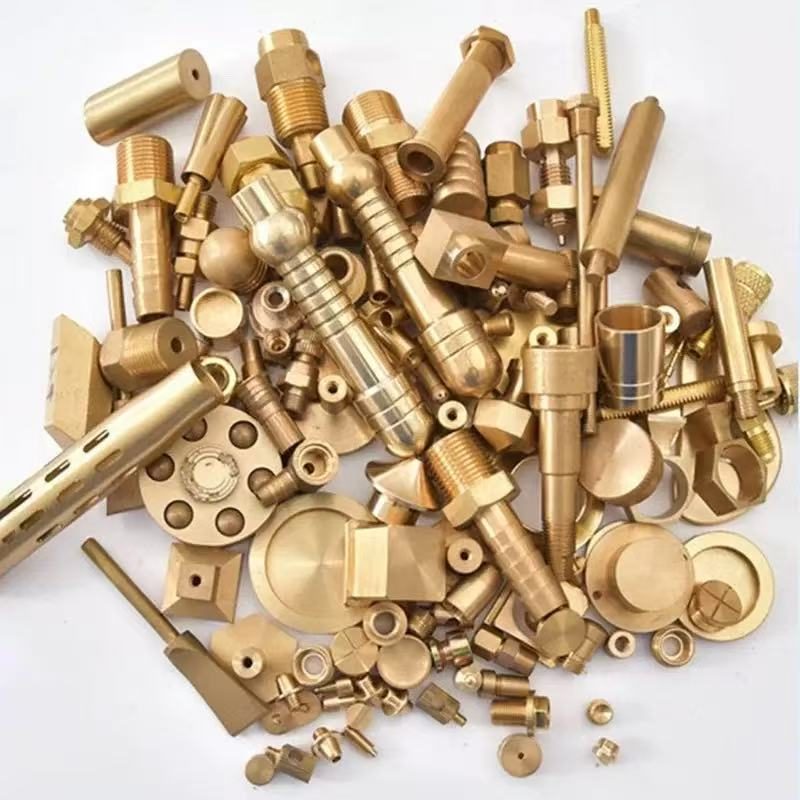
Type II clear and colour for enclosures.
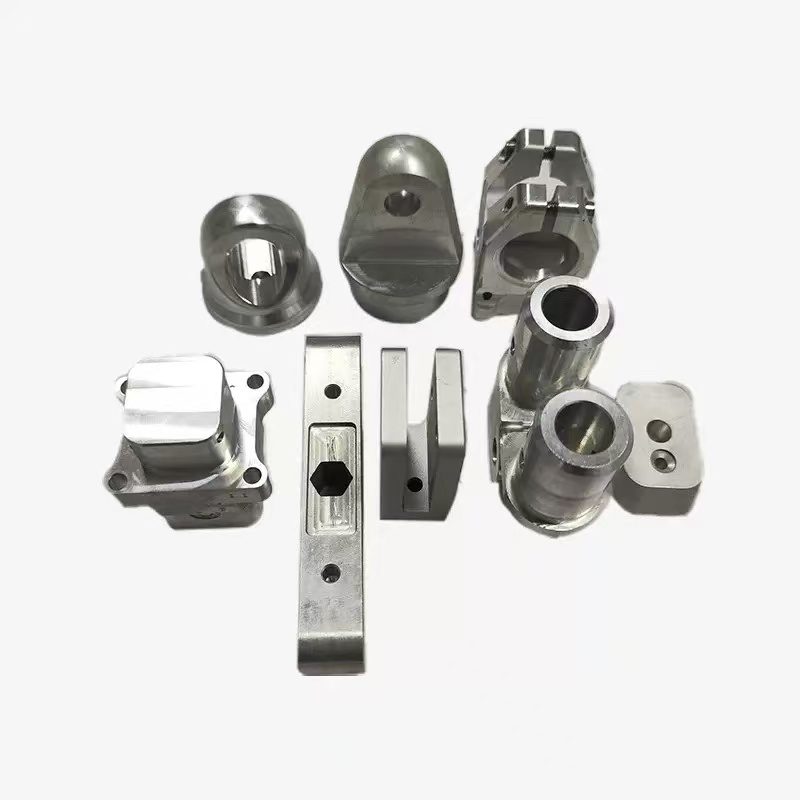
Type III class look on a handled part.
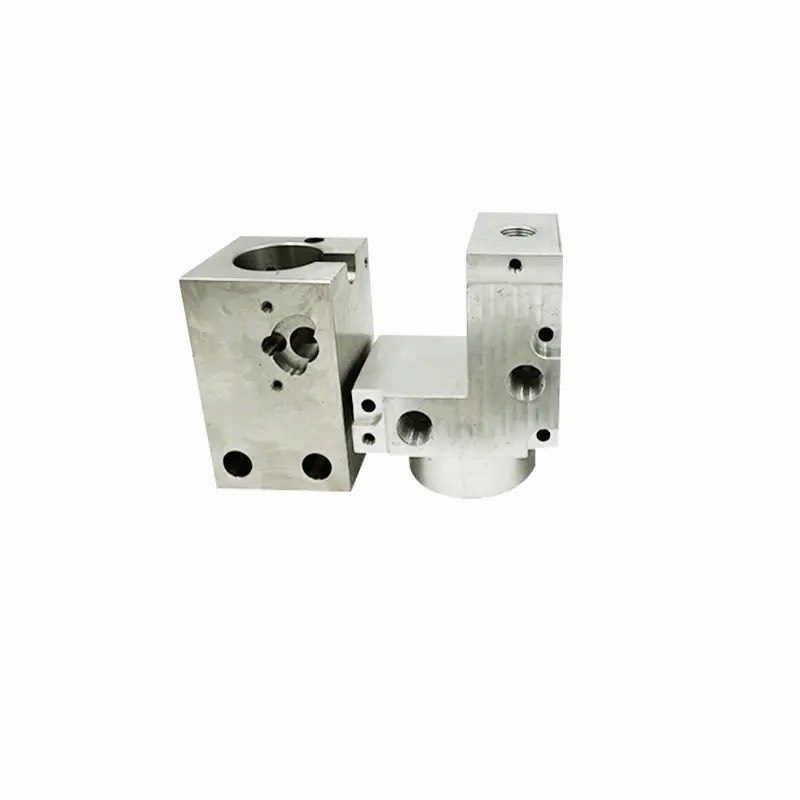
Flat faces and features in one clamping.
Anodizing CNC Aluminum — Common Questions
Does anodizing change the dimensions of a CNC aluminum part?
Type II or Type III anodizing — which should I specify?
Can you anodize 7075 or other high-copper alloys the same as 6061?
How much does Type III hardcoat anodizing cost versus Type II?
Do you machine and anodize in one workflow?
Got a bore that came back 25 µm short after anodizing?
Send the drawing with the anodize call-out and the finished-part tolerance. We'll compensate the machined dimensions up front, mask any bond face you flag, and return DFM feedback within 24 hours — so the part lands in spec after coating, not before it.