Aluminum CNC Machining: Grades 6061/7075, Tolerances & When to Choose It
Aluminum is the most machined metal in custom part work for a reason — it cuts fast, holds tight tolerance, anodizes cleanly and weighs a third of steel. Here is how to pick the grade, what tolerance to expect, and the design rules that keep an aluminum part cheap and accurate.
Why Choose Aluminum for a CNC Part
Aluminum machines faster than steel with less tool wear, so cycle time and tooling cost both drop — and because it is light and dimensionally stable, it holds tight tolerance without the heavy clamping steel needs. For brackets, housings, fixtures, heatsinks and most prototypes it is the default choice. Where the part needs steel's hardness or load capacity, our materials overview compares the families. See the full numeric grade picture in the aluminium grade chart.
| Grade | Machinability | Strength | Notes | Typical use |
|---|---|---|---|---|
| 6061-T6 | Excellent | Good | Weldable, anodizes well | Brackets, housings, fixtures |
| 7075-T6 | Good | Very high | Less corrosion resistant, hard to weld | Aerospace, high-load parts |
| 6082 | Excellent | Good | EU equivalent of 6061 | General EU-sourced parts |
| 2024 | Good | High | Poor corrosion resistance | Structural, aircraft |
| 5052 | Fair | Moderate | Best corrosion resistance | Marine, enclosures |
| MIC-6 (cast plate) | Excellent | Low | Stress-relieved, very flat | Bases, plates, jigs |
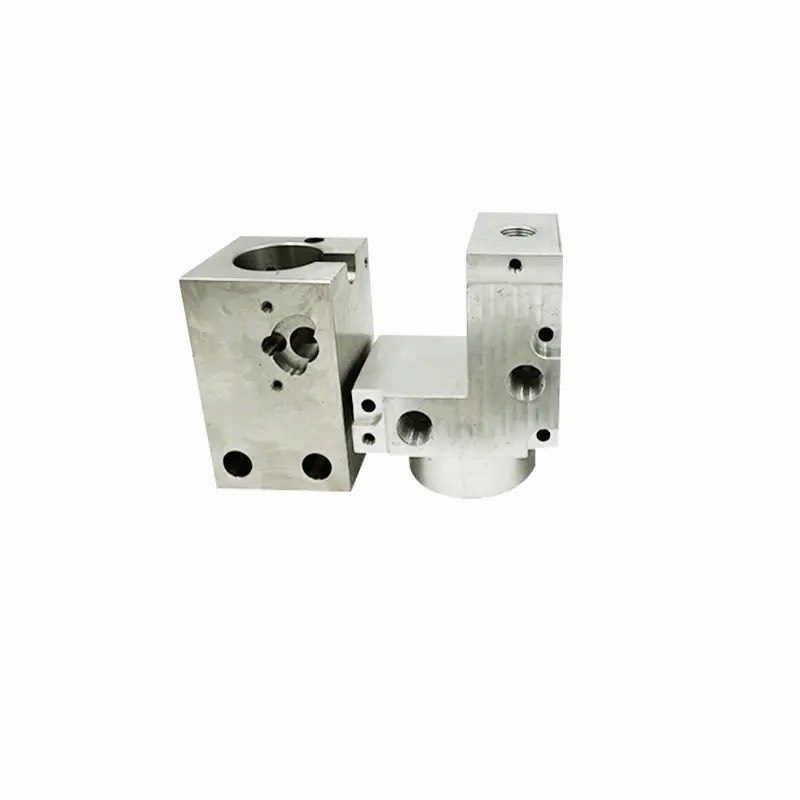
6061 milled bodies, drilled and tapped ports. See CNC milling.
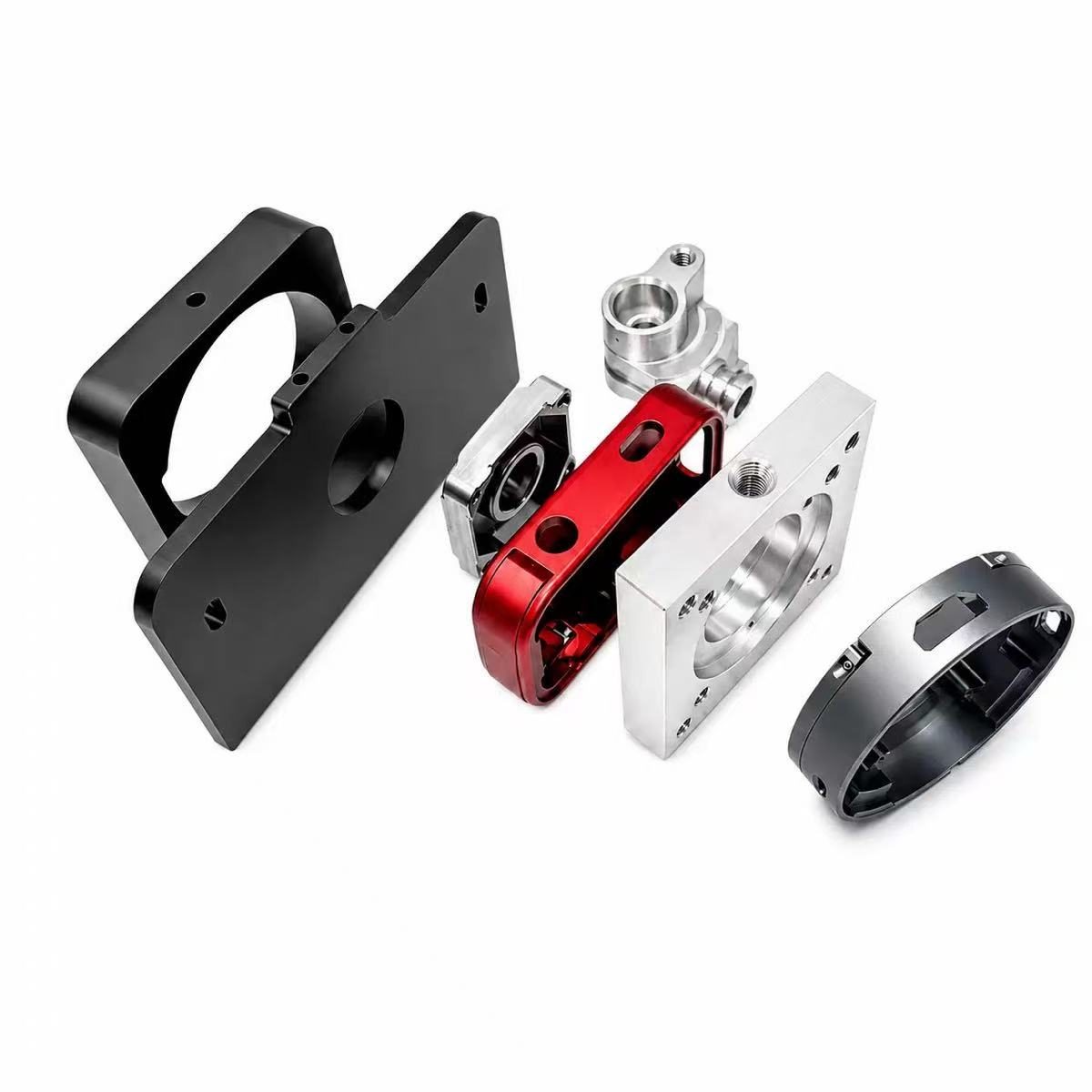
Brackets, fittings and small housings in 6061/7075.
Tolerances and Surface Finish on Aluminum
Aluminum is predictable, which is why it machines to tight tolerance more easily than many steels: routinely ±0.025 mm, and ±0.01 mm on critical features with a controlled setup. The full table and the cost curve behind it are in our tolerance chart. For appearance or corrosion resistance, anodizing is the standard finish — Type II for color, Type III (hardcoat) for wear. Remember anodizing adds a few microns, so a bore or shaft that must fit after coating should be called out at finished size with the layer accounted for (or masked).
Which Process
Most aluminum parts are milled; round ones are turned. For parts with angled features or multiple faces, 5-axis machining reduces setups and keeps critical relationships true. Aluminum's speed makes it ideal for both one-off prototypes and low-volume runs. If you're weighing aluminium against stainless or titanium, our three-material comparison lays out the strength, machinability and cost trade-offs. Aluminium is also the default material for machined electronics enclosures — our guide to CNC machining electronics enclosures covers the wall-thickness, EMI-groove and thread rules that keep a box from warping.
Design Rules That Keep Aluminum Cheap
Aluminum is forgiving, but a few rules still matter. Avoid very thin walls that chatter or deflect. Standardize thread sizes and hole diameters to off-the-shelf drills and taps. Only call out tight tolerance where the function needs it — over-specifying costs money for no benefit. The deeper version is in our cost-reduction guide and the GD&T guide for buyers. If you are weighing aluminum against printing for a low-volume part, the machining vs 3D printing comparison helps you decide.
Frequently asked
What is the best aluminum grade for CNC machining?
What tolerance can CNC machining hold on aluminum?
Can aluminum parts be anodized after machining?
Is aluminum cheaper to CNC machine than steel?
Need a custom aluminum part?
Send the drawing and the grade. We'll mill or turn it to tolerance, anodize if you want, and flag any dimension that is tighter than the function needs.
Related: Material Selection Guide