Brass CNC Machining: C360 Custom Parts & Turned Components
Brass is the easiest metal to machine — chips break clean, threads cut in one pass, knurling comes off the tool crisp, and the surface finish is bright gold without secondary work. For OEM programs that need turned fasteners, knurled knobs, threaded inserts, decorative components or brass pump impellers, C360 free-machining brass is almost always the right answer.
Why Choose Brass for a CNC Part
Brass is unique among engineering metals: it machines faster than aluminum in many geometries (C360 brass has a rated machinability of 100%, the baseline), holds tight tolerance, threads cleanly, knurls without tearing, and leaves the spindle with a finished surface that needs almost no post-processing. For CNC turning in particular — shafts, bushings, threaded fasteners, knurled grips, fittings — brass is the workhorse material.
The trade-offs are real: brass is heavier than aluminum, more expensive per kilogram, and has lower strength than heat-treated steel. For pure corrosion resistance in chloride environments, 316 stainless still wins. But for any part where machinability, thread quality, knurling, electrical conductivity or decorative finish drives the design, brass is the right choice. The full material picture — and how brass compares to copper, aluminum and stainless — is in our brass & copper material guide.
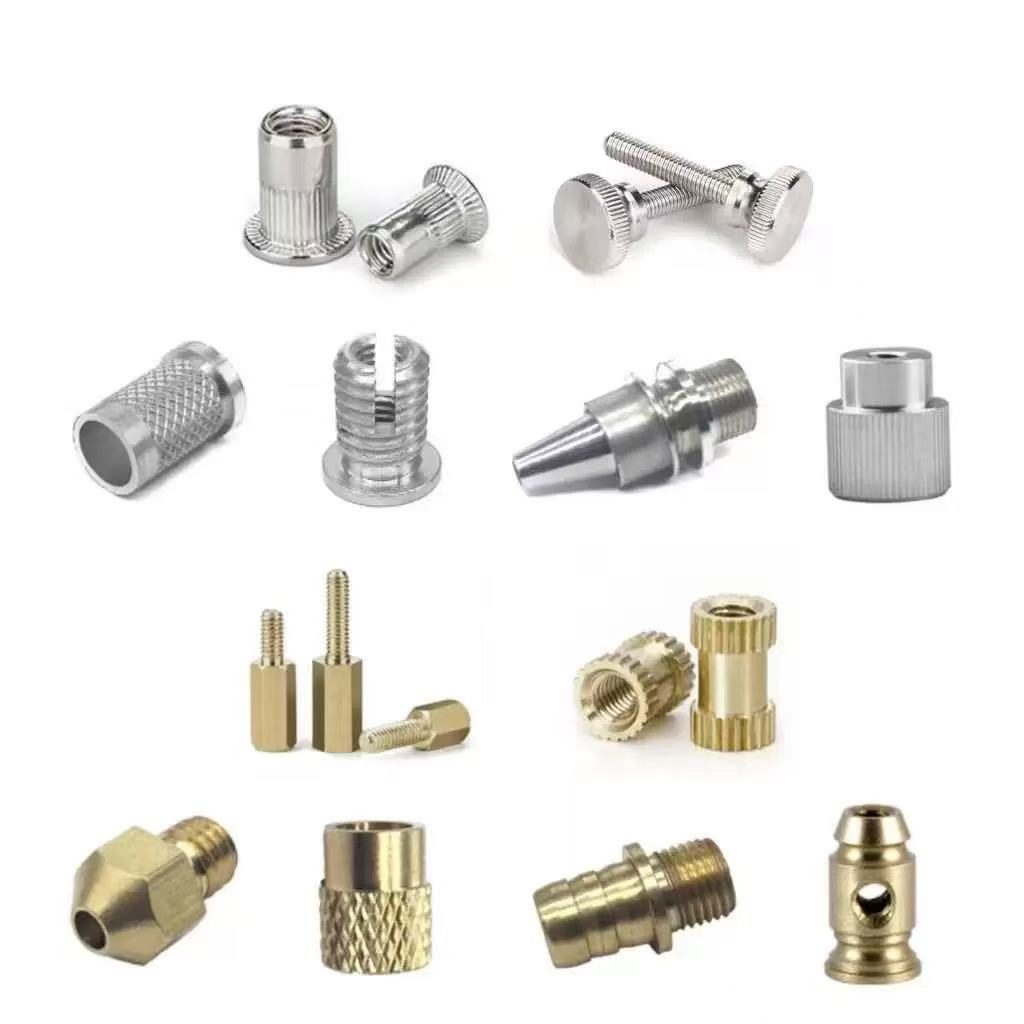
Common Brass Parts We Machine
Brass dominates any list of small turned and knurled components. The combination of free-machining behaviour, clean threading and crisp knurling makes it the default material for:
For a full side-by-side of brass against aluminium, stainless and titanium on strength, cost and machinability, see our material comparison.
- Knurled thumbscrews and adjustment knobs
- Threaded inserts, standoffs and spacers
- Decorative nuts, caps and covers
- Pneumatic and hydraulic fittings
- Instrument bodies and small valve components
- Electrical contacts and conductive parts
- Brass impellers and small turbine wheels
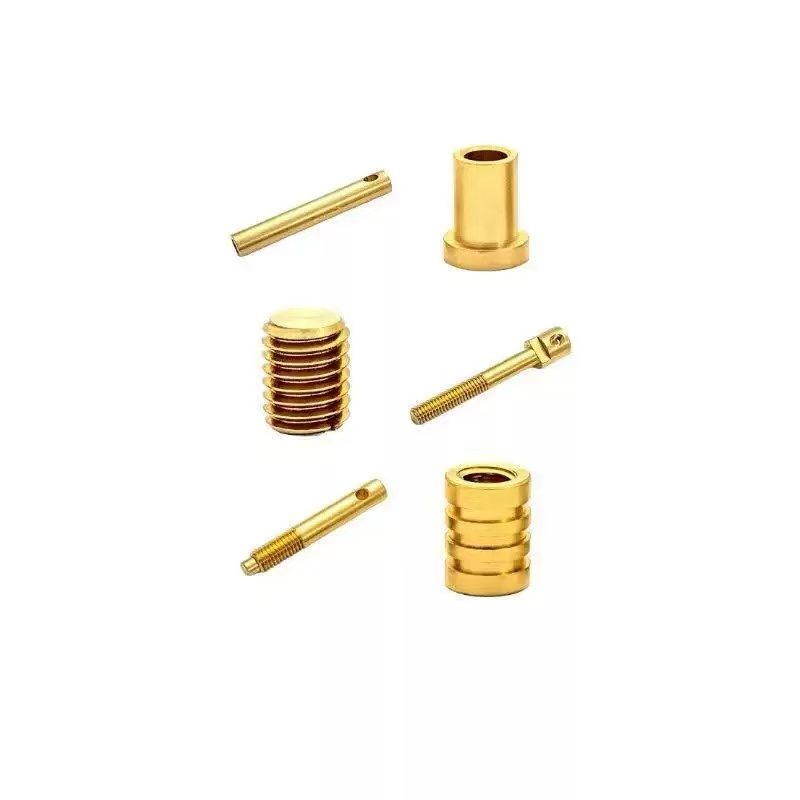
C360 brass turned to ±0.01mm with internal/external threads. See our CNC turning service.
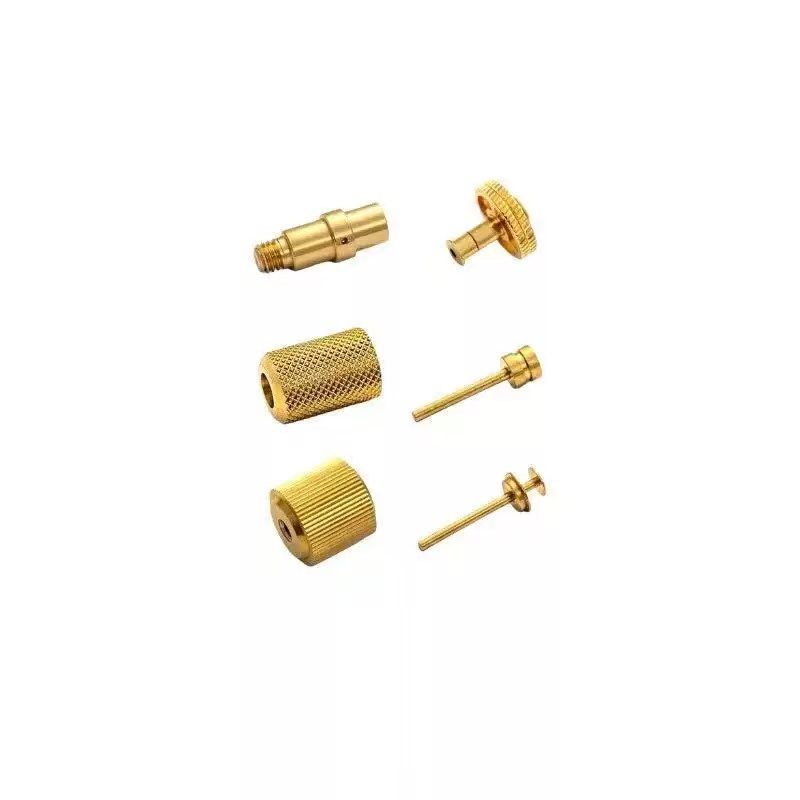
Crisp knurling and metric threads in C360 brass, single-setup lathe work. See the brass material guide.
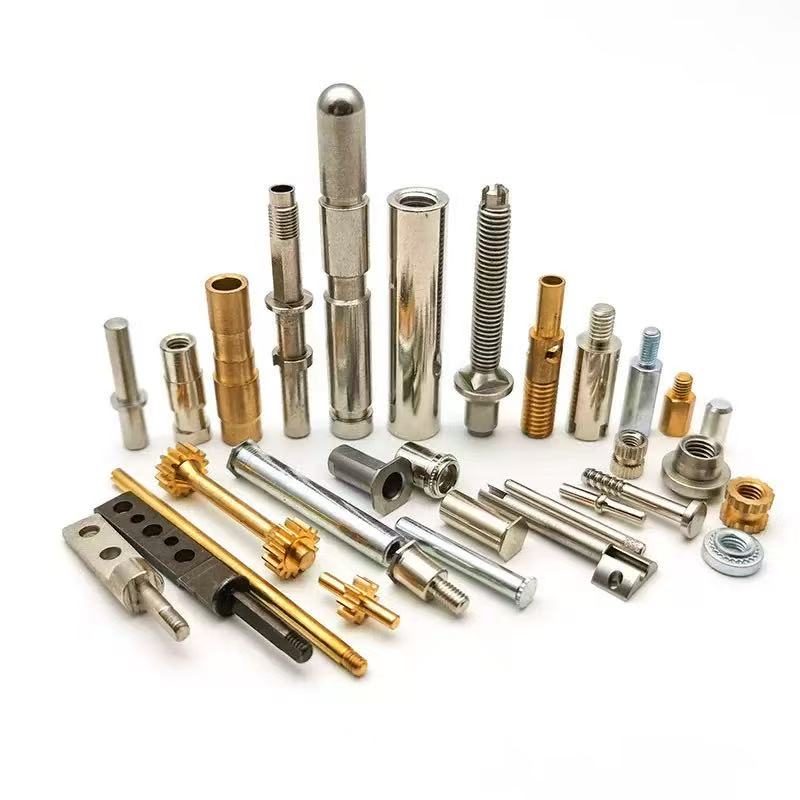
Threaded inserts and knurled nuts in brass C360 for high-volume OEM runs.
Brass Impellers and Turbine Wheels
Brass is the standard material for pump impellers, mixer blades and small turbine wheels. It cuts cleanly enough to hold curved blade geometry without chatter, resists corrosion in water-handling applications, and the finished piece balances well because brass is a dense, uniform material. We machine single-piece brass impellers up to about 300 mm diameter in C360 and naval brass; for larger diameters we split into a hub and blade sub-assembly. Below is a selection of recent impeller and turbine work — the curved fin pump, louvered turbine, mixer agitator and radial-finned turbine all came out of one-off or low-volume OEM programs.
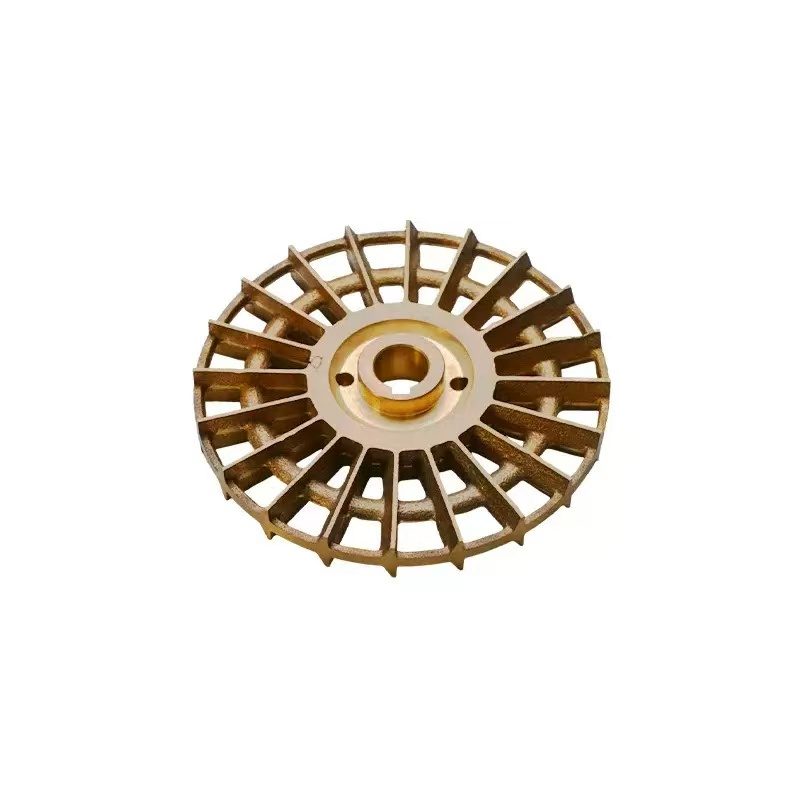
Curved volute fins machined from solid C360 brass, balanced and ready for pump assembly.
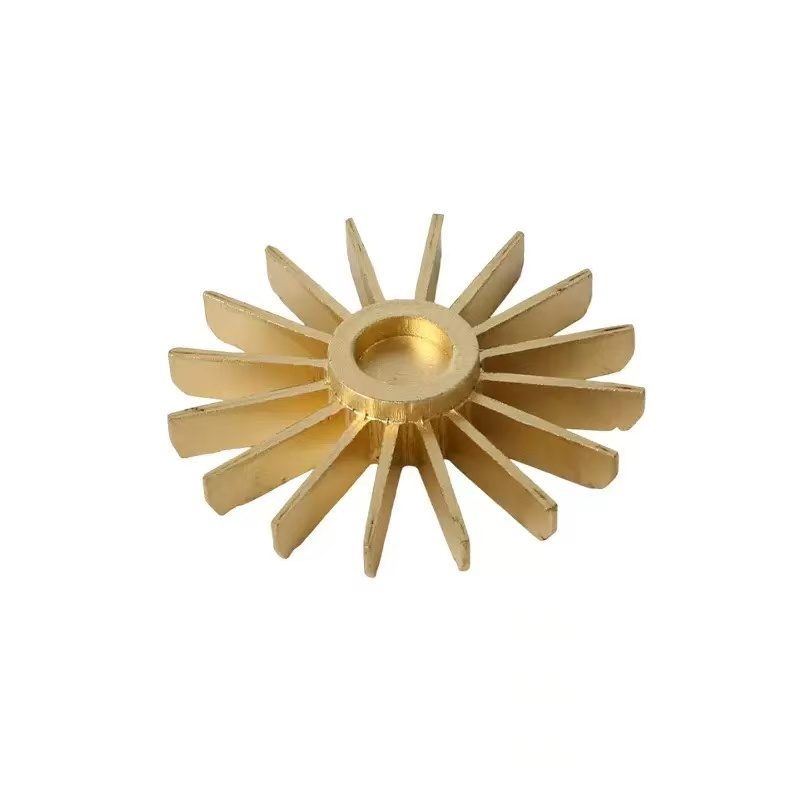
Radial cooling/louver fins on a single-piece brass blank — one of the geometries that brass handles cleanly.
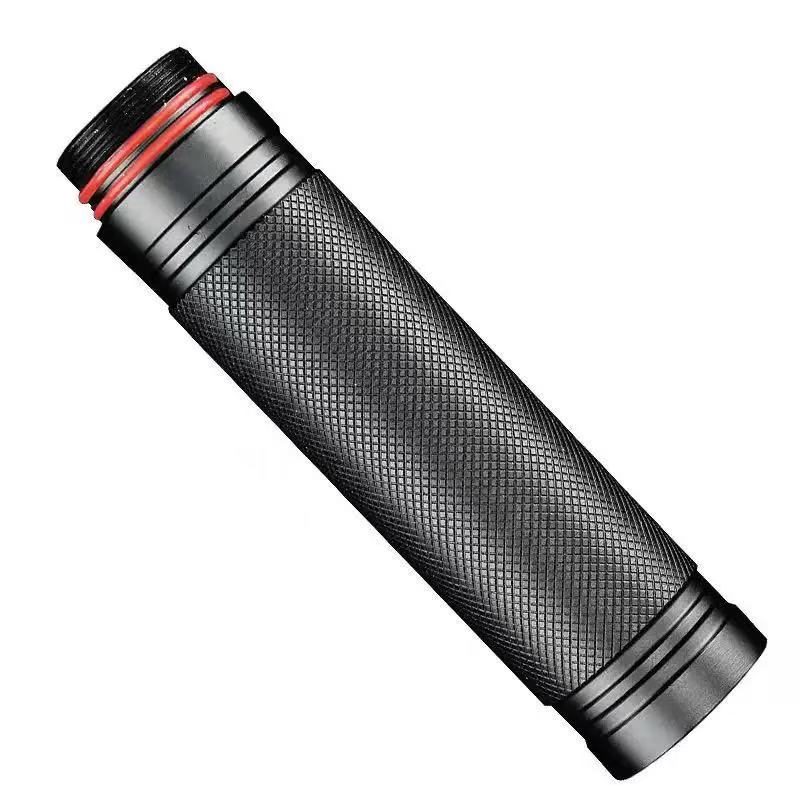
Large curved blades on a single brass blank — the kind of geometry that benefits from brass's clean cutting behaviour.
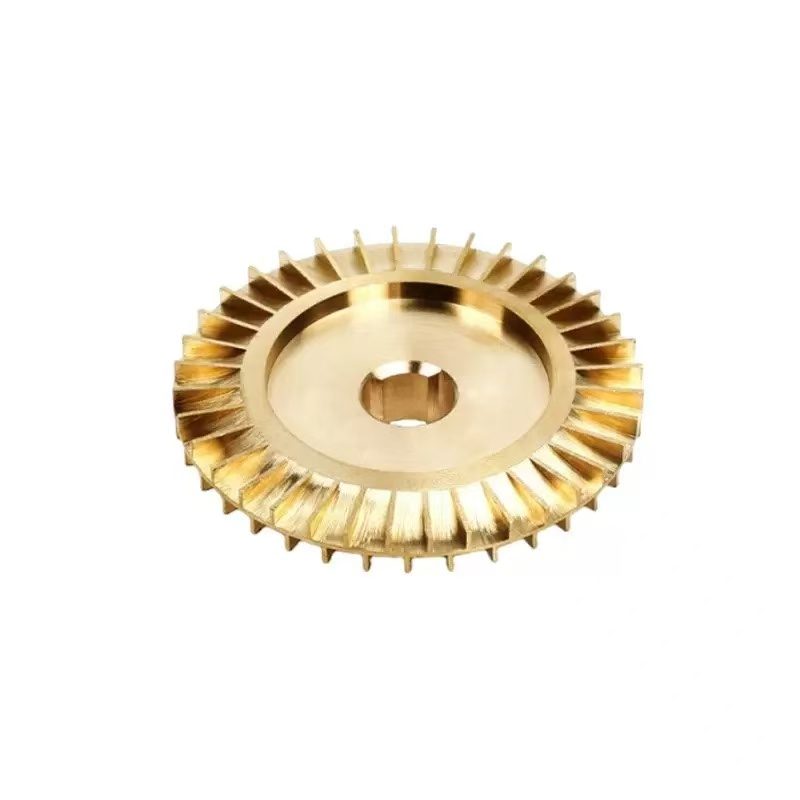
Full radial-finned turbine machined from solid brass — balanced and ready for assembly.
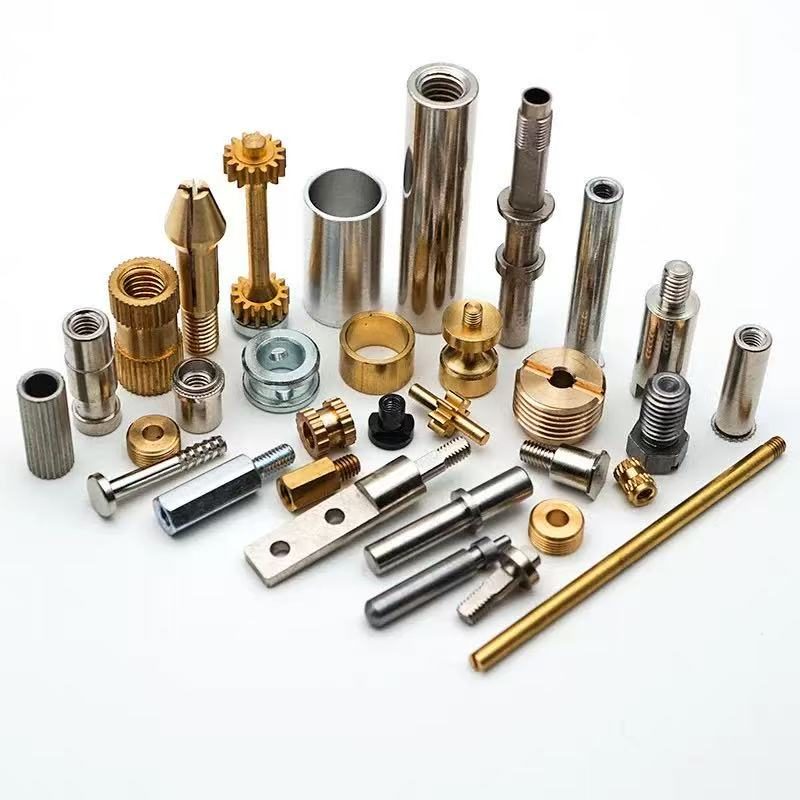
Angled radial vanes on a single-piece brass blank — an alternative turbine geometry, also machined from C360.
Brass Grades for CNC Machining
C360 is the default and handles roughly 90% of brass CNC work. For plumbing fittings with dezincification risk, naval brass and DZR grades are specified. For decorative parts without lead, lead-free brass alloys (C27450 / C69300) are available. The full grade breakdown and finishes are in our brass & copper material guide; the quick reference is below.
| Grade | Composition | Machinability | Typical use |
|---|---|---|---|
| C36000 / C3602 / C3604 | Cu-Zn-Pb free-machining brass | 100% (baseline) | Connectors, fittings, instrument parts, knurled grips — the default |
| C27450 / C69300 | Lead-free brass | ~80% | Drinking-water contact, child-safe products, RoHS compliance |
| C26000 (cartridge brass) | Cu-Zn, 30% Zn | ~70% | Decorative, ammunition, deep-drawn parts |
| H59 / H62 (CuZn39Pb2 / CuZn40Pb2) | Duplex brass with lead | ~85% | Plumbing fittings, valve bodies, decorative hardware |
| Naval brass (C46400) | Cu-Zn-Sn, 1% Sn | ~50% | Marine fittings, pump impellers, saltwater contact |
| DZR brass (CW602N / C35330) | Cu-Zn-Pb with arsenic | ~75% | Potable water fittings, dezincification resistance |
| C1100 (pure copper) | 99.9% Cu | ~20% | Electrical conductors, bus bars, heat exchangers |
Machinability ratings are relative to C360 brass (= 100%). Higher = easier to cut. C360's lead content is what makes it the easiest of all metals to machine — chips break clean and tool life extends dramatically.
More Brass Parts From Recent Production
Below are two larger collections from the production floor — the kind of parts that show the full scope of what brass can do when it is machined well. For the smaller precision components we cut on a daily basis, see the gallery on our CNC turning page and the brass material section.
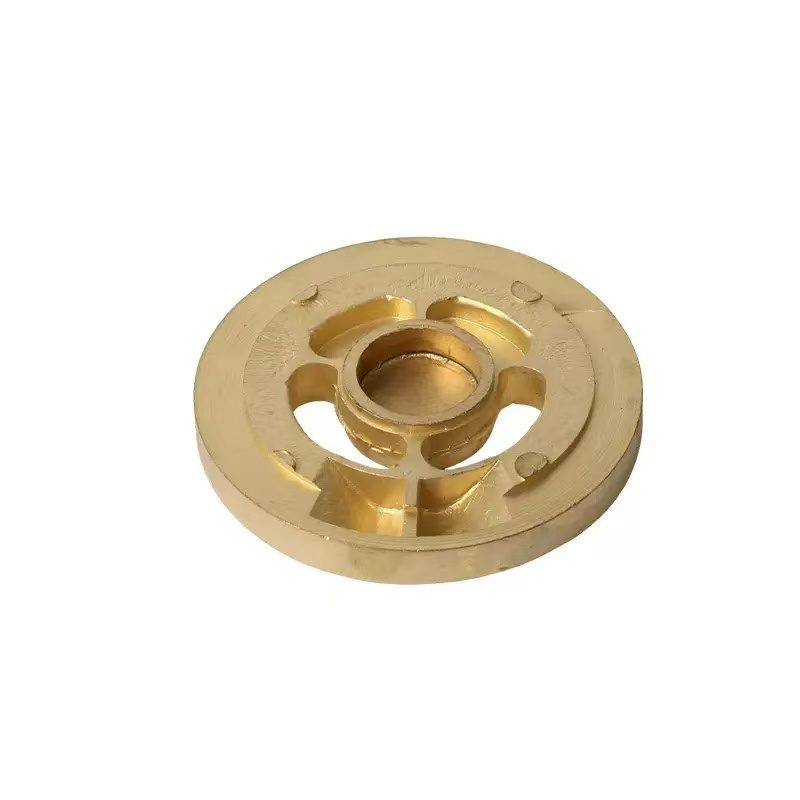
Threaded posts, knurled nuts, hex nuts, sleeves and decorative caps — the kind of brass batch that shows up in OEM recurring orders.
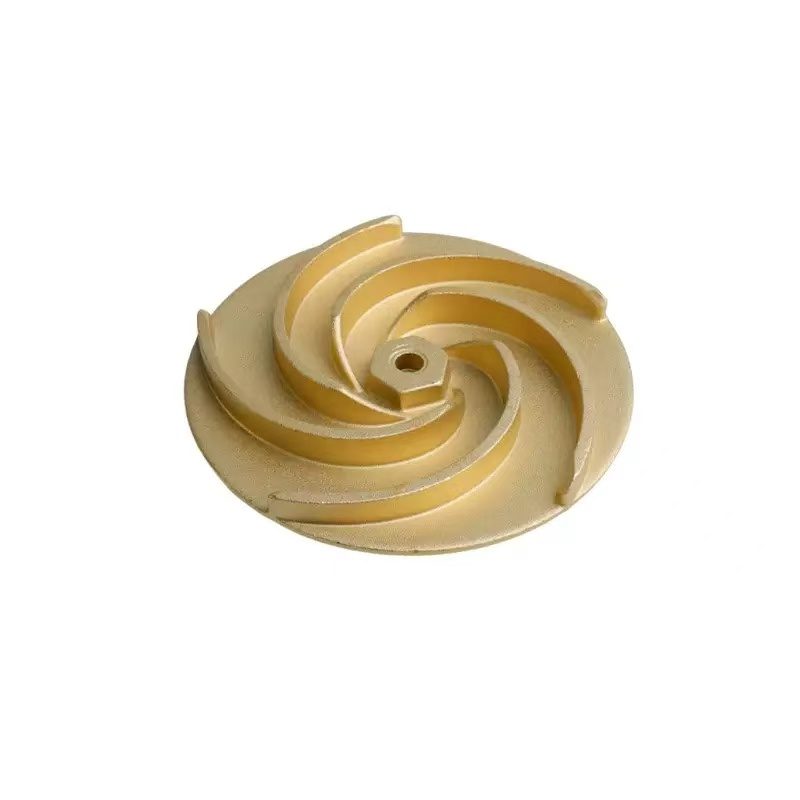
A larger OEM program — threaded inserts, sleeves, decorative fittings and precision components in C360 brass.
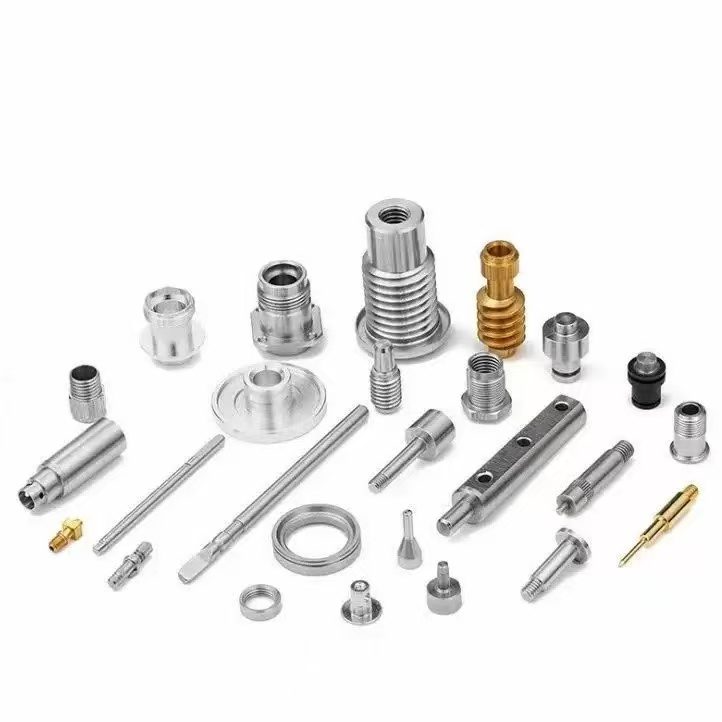
Decorative cutouts on a brass disc — the kind of geometry brass handles cleanly without burring or tearing.
Tolerance, Surface Finish and Knurling
Brass is dimensionally stable and easy on the tool, so brass parts routinely hold ±0.01 mm on critical features — threads, knurled diameters, register faces — and ±0.05 mm as standard. The full tolerance-cost curve is in our tolerance chart. Surface finish comes off the tool bright; standard options are satin brushed, mirror polish, antique patina, clear lacquer (preserves the bright finish in service), and plating — nickel, tin or gold flash for decorative or electrical-contact parts. Knurling on brass comes out crisp at standard pitches (0.5 mm / 1.0 mm / 1.5 mm) without tearing — one of the reasons brass is the default for thumb screws and knurled adjustment knobs.
Lead Time and Order Size
Brass prototypes from existing bar stock run 5–7 working days; production orders of 100–10,000 pieces typically 2–4 weeks. We have no minimum order quantity. For brass programs that mix parts (e.g. a turned brass fitting plus a milled aluminum housing in the same assembly), our prototyping service and low-volume production both handle mixed-material batches in one quote.
Brass CNC Machining Questions
What is the best brass grade for CNC machining?
Can brass parts be knurled and threaded?
How much does brass CNC machining cost?
Do you machine brass impellers and turbines?
What finishes are available on brass parts?
Need a custom brass part?
Send the drawing and the brass grade you need. We'll turn or mill it from C360 (or your specified alloy), thread and knurl to spec, and finish to your requirement.
Related: Material Selection Guide