Plastic CNC Machining Guide: POM, PEEK, PTFE, Nylon & How to Cut Them
Engineering plastics are a bigger share of real assemblies than most people expect — and a surprising number of them are easier and cheaper to machine than to print. Here are the grades buyers actually specify, why each one is tricky, and the tricks that keep them in tolerance.
Why Machine Plastic at All?
For functional parts, machining beats printing on three things that matter: you get the real certified grade (PEEK 450G, POM-C, virgin PTFE), the part is isotropic, and you hold tight tolerance with a clean, sealed edge. Printed plastic approximates the material, is layered, and rarely seals. For a gear, a bushing, an insulator or a food-contact component, machined plastic is the standard route. See how it stacks up against printing in our machining vs 3D printing guide.
The general rules below apply across the family; the materials overview covers metals too if your assembly mixes both. For parts bound for medical devices or aerospace programs, the certified grade and traceability matter most.
| Plastic | Common name | Key property | Machining quirk | Typical use |
|---|---|---|---|---|
| POM | Acetal / Delrin | Low friction, stable | Springy — sharp tools, avoid burrs | Gears, bushings, fixtures |
| PEEK | — | High temp, chemical resistant | Work-hardens, holds heat | Aerospace, medical, semiconductor |
| PTFE | Teflon | Non-stick, inert | Deforms under clamp & tool | Seals, insulators, gaskets |
| PA | Nylon | Tough, wear resistant | Hygroscopic — moves with moisture | Wear parts, rollers |
| UHMW | — | Abrasion resistant | Very soft, chatters easily | Wear strips, chutes |
| PC | Polycarbonate | Clear, impact tough | Prone to stress cracking | Covers, guards |
| ABS | — | Easy, cheap | Soft, melts at edge if dull | Housings, jigs |
The Five Tricks That Keep Plastic in Tolerance
1. Sharp tools, always
Plastic springs back from a dull edge and smears instead of shearing. A fresh carbide cutter with high rake and a polished flute gives a clean cut and no burr. The moment a tool goes dull you get heat, melt and a ragged edge — so tool changes are scheduled, not waited for.
2. Back the whole face (fixturing)
This is where PTFE and UHMW fail if you're careless. They have low rigidity and will deflect or creep under a vice jaw. A support fixture that backs the entire machined face, plus light clamp pressure, keeps the part from moving during the cut and from growing when you let go. Over-tightening is as bad as under-tightening.
3. Light passes, no dwelling
PEEK work-hardens under a dwelling tool; a hesitant cut leaves a hardened skin that destroys the next tool. Keep the tool moving, take moderate depths, and use coolant to pull heat out. For most plastics, high surface speed with a light feed beats a heavy single pass.
4. Respect thermal and moisture movement
Plastics expand more than metal and some absorb water. Nylon can take on moisture and grow over a day. For a tight fit, hold the part at a stable room temperature and, for hygroscopic grades, machine and measure close together in time. If the part will see a warm environment, tolerance it for the warm size, not the cold one off the machine.
5. Don't forget the edge finish
A sealed, burr-free edge matters on plastics more than on metal — burrs catch, and a melted edge wrecks a seal. Our surface finish chart shows what each finish adds; for most plastic functional parts the as-machined edge is fine, but a sealing face may want a light pass to a defined Ra.
Grade-by-Grade Notes
POM (Acetal / Delrin)
The friendly one. Stable, low friction, holds dimension well, machines like a dream if the tool is sharp. The only trap is the springy burr at the exit — deburr as you go. First choice for gears, bushings and fixtures.
PEEK
The premium one — high temperature, chemical and radiation resistance, and it holds tolerance beautifully once you respect its two quirks (work-hardening, heat). Sharp carbide, coolant, rigid setup, keep moving. Used in aerospace, medical and semiconductor where the certified grade is non-negotiable.
PTFE (Teflon)
The tricky one. Almost no rigidity, creeps under clamp load, springs from the tool. Fixture the whole face, light passes, sharp tools, gentle clamping. The reward is a genuine non-stick, chemical-inert seal or insulator that printing simply can't match. Virgin vs filled (glass, bronze) changes the cutting entirely — filled grades wear tools fast.
Nylon (PA)
Tough and wear-resistant, but hygroscopic. Great for wear parts and rollers; plan around moisture movement if the fit is tight. Cast nylon (PA6-G) is more dimensionally stable than extruded for larger sections.
UHMW
Extreme abrasion resistance but very soft and chattery. Back it fully, take gentle passes, expect to fight vibration. Perfect for wear strips and chute liners where nothing else survives.
For context on how plastic compares to the metals people usually weigh it against, our aluminium vs stainless vs titanium comparison covers the metal side; titanium is the one to avoid unless you truly need it.
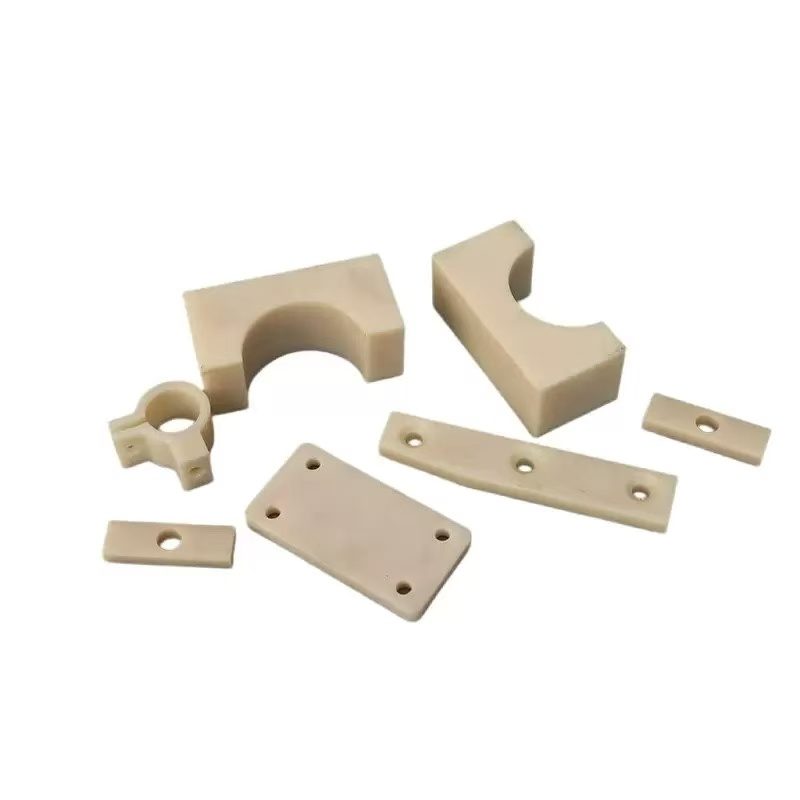
Acetal turned to a clean, sealed edge — ideal for low-friction parts.
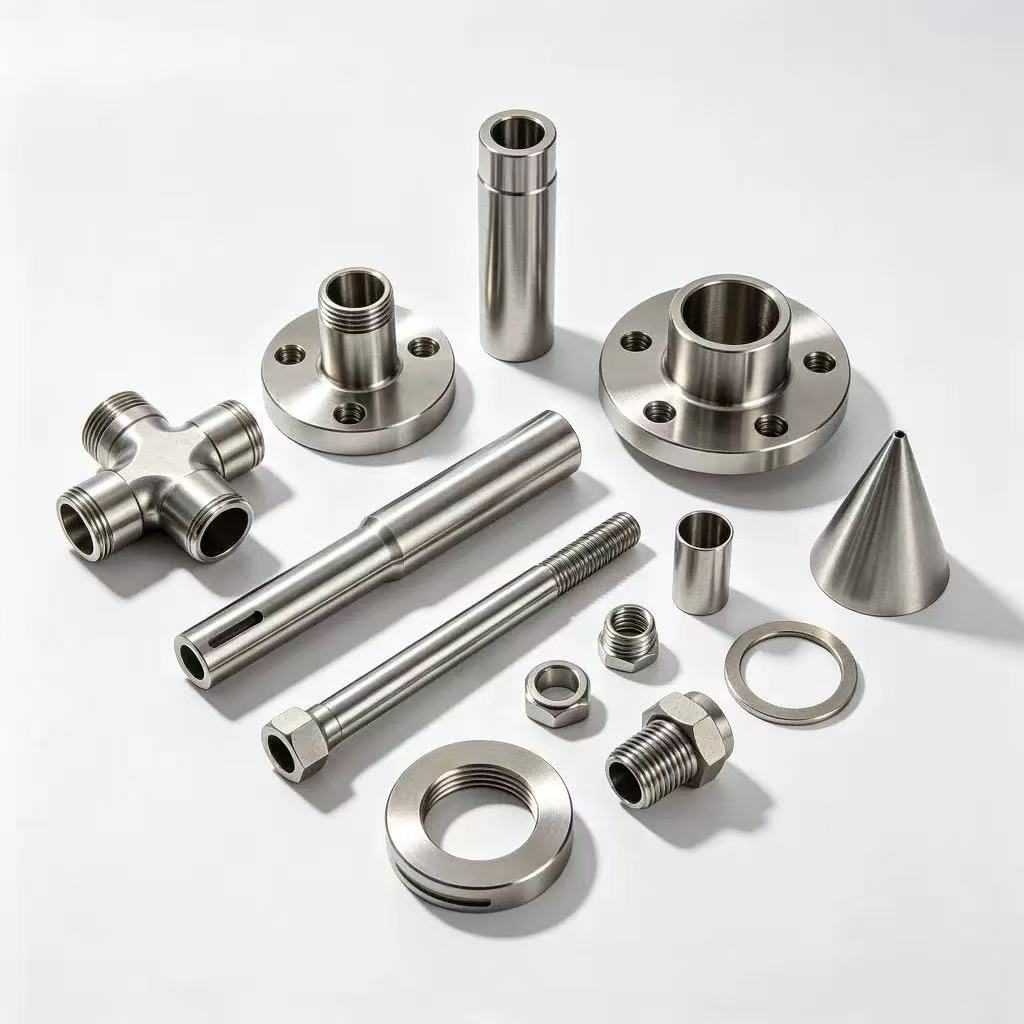
PEEK for high-temp/medical; POM for stable, low-friction use.
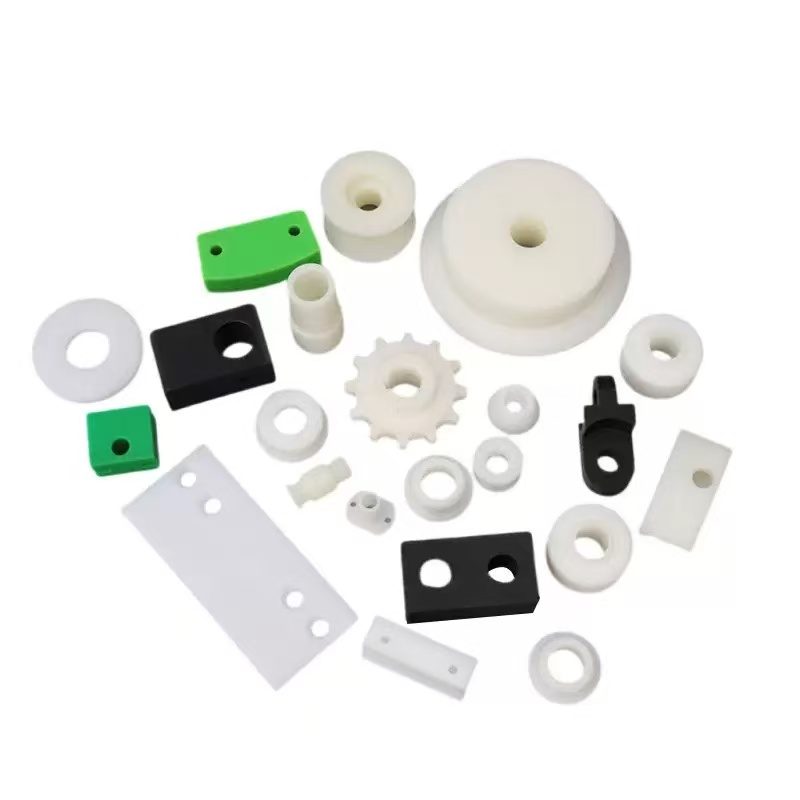
Tough, wear-resistant parts — plan around moisture movement.
Which Plastic for Your Part?
Pick by what the part has to survive.
| If the part must… | Start with | Watch out for |
|---|---|---|
| Slide, gear, low friction | POM | Springy burr at exit |
| Take heat + chemicals (certified) | PEEK | Work-hardening, tool heat |
| Seal, insulate, stay inert | PTFE (virgin) | Deflects under clamp & tool |
| Absorb wear, take impact | Nylon PA | Moisture movement |
| Survive abrasion (liners) | UHMW | Chatter, softness |
| Be clear and impact-tough | Polycarbonate | Stress cracking at edges |
Plastic Machining Questions
Can you CNC machine plastic instead of 3D printing it?
Why does PTFE (Teflon) deform while machining?
Is PEEK hard to machine?
What tolerance can I hold on machined plastic?
Got a plastic part that printing keeps getting wrong?
Send the drawing and the grade you need. We'll machine it from certified stock and hold the tolerance — including the sealed edge printing can't give you.
Related: Material Selection Guide