Copper CNC Machining: Grades, the Built-Up-Edge Problem & Tolerances
Your part has to carry current or move heat — that's the only good reason to machine copper. Copper (C110) conducts at ~101% IACS but machines at a fifth of brass's rating; soft chips weld to the tool and smear the finish. Choose copper only when brass can't meet the electrical or thermal spec — C360 is faster and cheaper.
Choose Copper Only When Brass Can't Meet the Spec
You're weighing copper against brass, and the wrong call costs you either performance or money. Work the decision in one order: lock the functional requirement first, then optimize for machinability. If the part's job is electrical or thermal, brass cannot hit the number and copper's harder cut is simply the price of the function. If the part is mechanical, decorative or only lightly electrical, brass wins on every other axis — it runs at high spindle speeds, breaks chips cleanly and needs little or no deburring. We've seen quotes come in for easy brass and then fail their conductivity spec in service; reversing the order is the common mistake.
Copper and Brass Grades Side by Side
Conductivity and machinability move in opposite directions — that trade is the whole decision.
| Grade | Type | Conductivity | Machinability | Use it for |
|---|---|---|---|---|
| C110 (ETP) | Pure copper | ~101% IACS | ~20% (gummy) | Bus bars, terminals, RF, heat sinks |
| C145 (Tellurium) | Copper alloy | ~93% IACS | ~80% | Conductive parts that must cut cleanly |
| C172 (Beryllium) | Copper alloy | ~22% IACS | moderate | Springs, contacts, non-sparking tools |
| C360 (Brass) | Cu–Zn alloy | ~26% IACS | 100% (benchmark) | Fittings, valves, connectors, housings |
| C260 (Cartridge) | Brass | ~28% IACS | ~30% | Formed hardware, decorative |
Conductivity and machinability ratings are industry-typical (C360 brass = 100). The full material picture — including aluminium, stainless and plastics — is in the materials overview; the brass-specific guide is brass CNC machining.
The Built-Up-Edge Problem — Why Copper Smears
You get the part back and the surface looks dragged rather than cut, with a ragged burr and a dimension that drifted. That's built-up edge (BUE): copper is so soft and ductile that it forms long, stringy chips which wrap the tool and weld onto the cutting edge, then tear away and smear the wall. The fix is in the tooling and coolant, not in brute force:
| What goes wrong | What we do |
|---|---|
| Long gummy chips wrap the tool | Very sharp, highly positive-rake polished cutters; chip breakers where geometry allows |
| Material welds to the edge (BUE) | Generous nose radius and a higher feed to keep the edge cutting, not rubbing |
| Surface smears, finish drags | Flood or high-pressure coolant to flush chips the moment they form |
| Burrs roll instead of breaking | Thicker minimum wall than brass; deburring budgeted as a real operation |
These are starting points to prove on a test cut — exact speed and feed move with alloy, temper and how rigid the fixture is, so we validate them on your actual part rather than quoting a textbook number. The wider cost logic is in our cost-reduction guide.
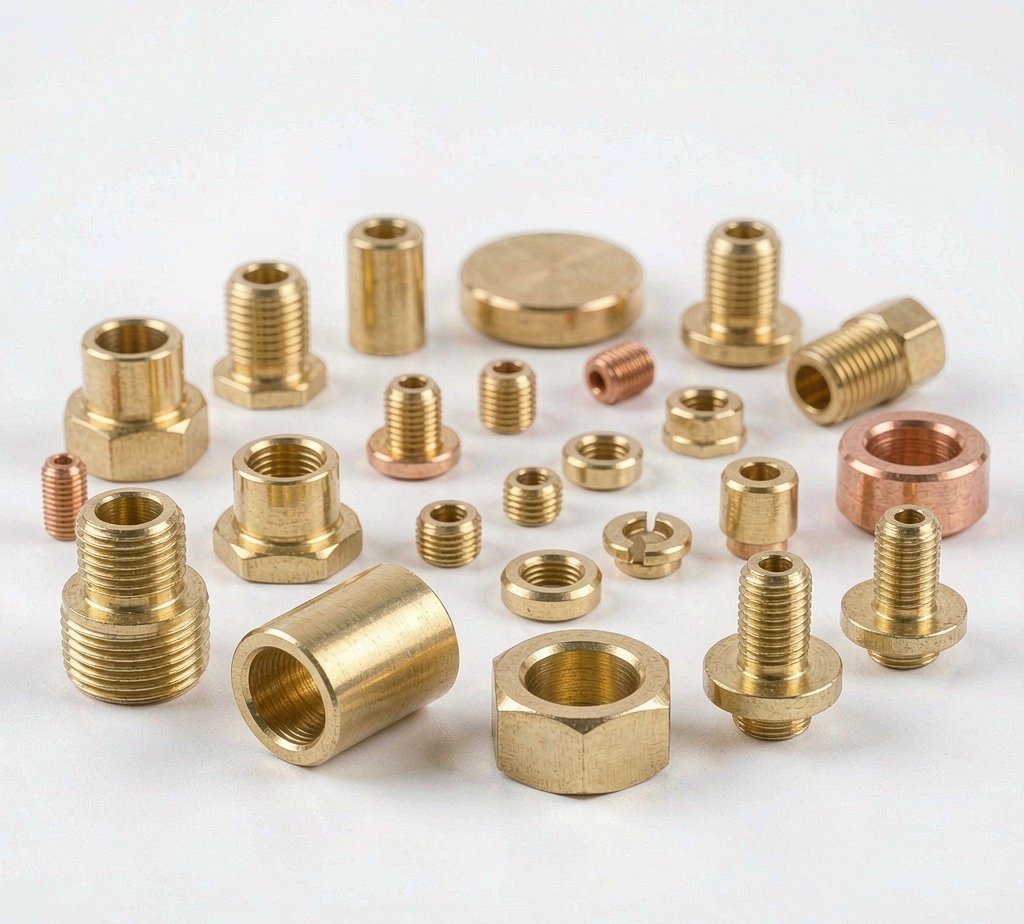
Bar ready for turning and milling.
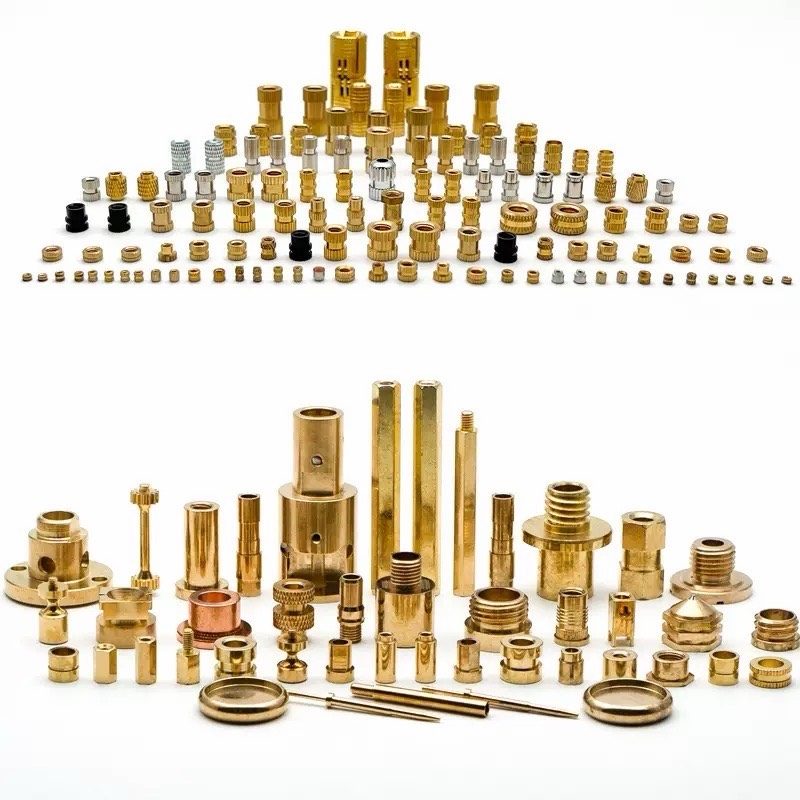
Connectors, terminals, fittings.
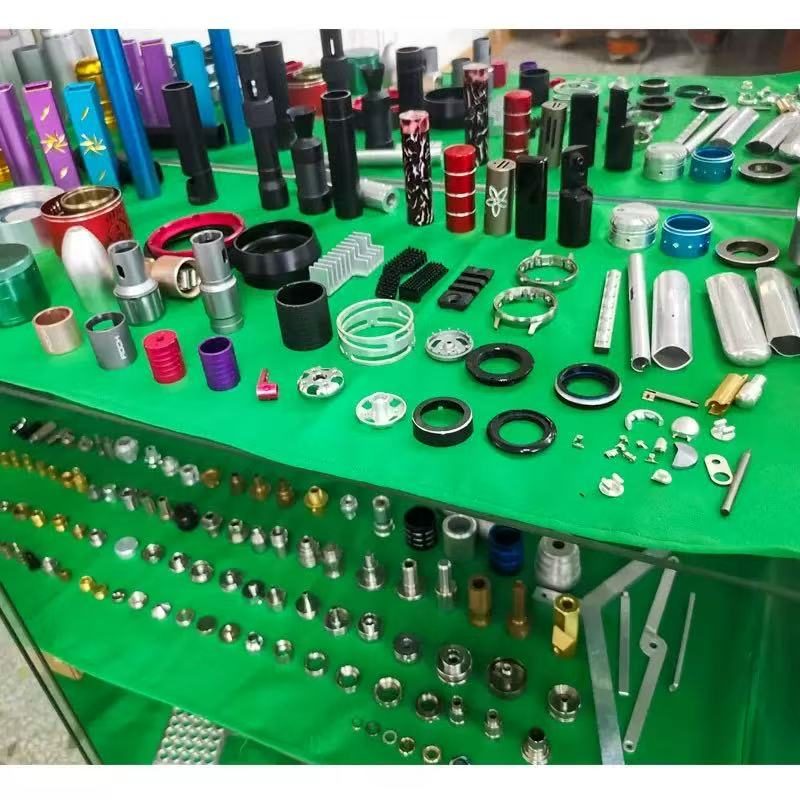
Small batches, tight features.
Tolerances That Actually Hold on Copper
Copper's softness hurts finish and burrs, not the dimension — so the tolerance bands are the same as our other metals.
| Level | Capability | Basis |
|---|---|---|
| Standard | ±0.05 mm | Per ISO 2768-m |
| Precision | ±0.01 mm on critical features | Per drawing, controlled setup |
| Aluminium typical (reference) | ±0.025 mm routinely | Well-fixtured parts |
Because copper deflects and burrs more than brass, we hold a thicker minimum wall and treat deburring as a planned step, not a cleanup afterthought. For thin-wall or fine-finish copper, we tune the setup on a first-article part and confirm the numbers before the run. The numeric bands and the tolerance-cost curve are in the CNC tolerance chart.
What Copper Really Costs to Machine
Be clear with yourself before you brief it: copper usually costs more per finished part than brass when conductivity isn't the goal. Three things stack against it at once — slower cutting speeds to manage built-up edge, faster tool wear from the gummy cut, and a real deburring and chip-handling burden because ductile copper burrs roll over instead of breaking off. Geometry, quantity and stock availability all move the gap, but the lever to check first is simple: does the part truly need copper's conductivity? If a brass grade meets the spec, the cost question answers itself. When copper is the right call, we quote per drawing within 24 hours and flag the tooling plan up front so there are no surprises on the first article.
Finishing Copper So It Doesn't Tarnish
Bare copper tarnishes in air, so most copper parts get a finish chosen by function. Nickel or tin plating gives solderability and corrosion protection; gold or silver plating is for electrical contacts where you want the lowest contact resistance; a clear lacquer keeps the natural copper look without plating. These are partner finishing operations done outside our cutting cell, so the quoted lead time includes the handoff — the same route as our other surface finishes. Tell us the end environment (marine, food, high-current) and we'll recommend the plating rather than guess.
Copper CNC Machining — Common Questions
When should I specify copper instead of brass for CNC machining?
Why does copper smear and build up on the cutting tool?
What copper grades do you machine?
How tight can tolerances be on machined copper?
Does copper need a finish to stop tarnishing?
Need a copper part that actually holds tolerance and finish?
Send the drawing with the conductivity or thermal requirement called out. We'll pick the grade (C110, C145 or C172), plan the tooling against built-up edge, and return DFM feedback and a per-drawing quote within 24 hours — so you get a clean copper part, not a smeared one.