CNC Machining for EV Components: Busbars, Housings & Cooling Plates
Electric-vehicle parts live or die at two interfaces — the weld where a busbar meets a cell, and the thermal interface where a cooling plate meets a module. Both are decided by how the part is machined, not by the drawing on the screen. Here is how to brief machined EV parts — busbars, battery and inverter housings, mounting brackets and liquid-cooling plates — so they pass first time. For the wider process picture, see our CNC milling service.
Why Machine an EV Part Instead of Casting It
An EV programme is a moving target: the pack layout, the busbar topology and the cooling strategy shift right up to production. Machining from solid aluminium or copper gets you a real, weld-ready, bond-ready part in days with zero tooling, which is exactly what validation builds and low-to-mid volumes need. Die casting and extrusion beat machining on unit cost once a part is frozen and volumes are high — but they need hard tooling and a stable design. If you are weighing processes for a new part, our process comparison logic applies just as well to casting versus machining.
What to Machine the Part From
For EV parts the material choice is mostly about conductivity, weight and the thermal path — not raw cost.
| If the part is a… | Start with | Watch out for |
|---|---|---|
| Battery busbar / tab | C110 copper or 1050/1060 aluminium | Contact face must be flat and burr-free to weld |
| Battery tray / structural housing | Aluminium 6061 / 6082 plate | Long thin sections can warp — hold the datum |
| Inverter / motor-controller housing | Aluminium 6061, die-cast or machined | Machined for low volume and complex internal features |
| Liquid-cooling / cold plate | Aluminium 6061 with sealed channels | Bond face flatness drives the thermal contact |
| Insulator / connector body | PEEK / nylon | No conductivity; watch creep under clamp load |
Aluminium is the default structural material across EV packs — it machines fast and is light enough that wall thickness is rarely the constraint. The grade choice and finishing detail are in our aluminium CNC guide; the full family comparison is in the materials overview.
The Tolerances That Actually Matter on an EV Part
Most of an EV part can sit at general tolerance. Spend the tight numbers on the two interfaces that fail silently — the electrical joint and the thermal joint.
| Feature | Hold it to | Why |
|---|---|---|
| Busbar contact face flatness | 0.05–0.1 mm | Laser weld or bolt joint fails on a warped face |
| Cooling-plate bond face | 0.05–0.1 mm | TIM only works where it actually contacts |
| Cell / module mounting hole pattern | ±0.05–0.1 mm | Stack has to line up across the pack |
| Sensor / bracket thread location | ±0.1 mm | Aligns with the mating harness or housing |
| External envelope | ISO 2768-m | General tolerance is enough |
The full numeric tables and the tolerance-cost curve are in the CNC tolerance chart; the coating thickness that changes a fit is in the surface finish comparison.
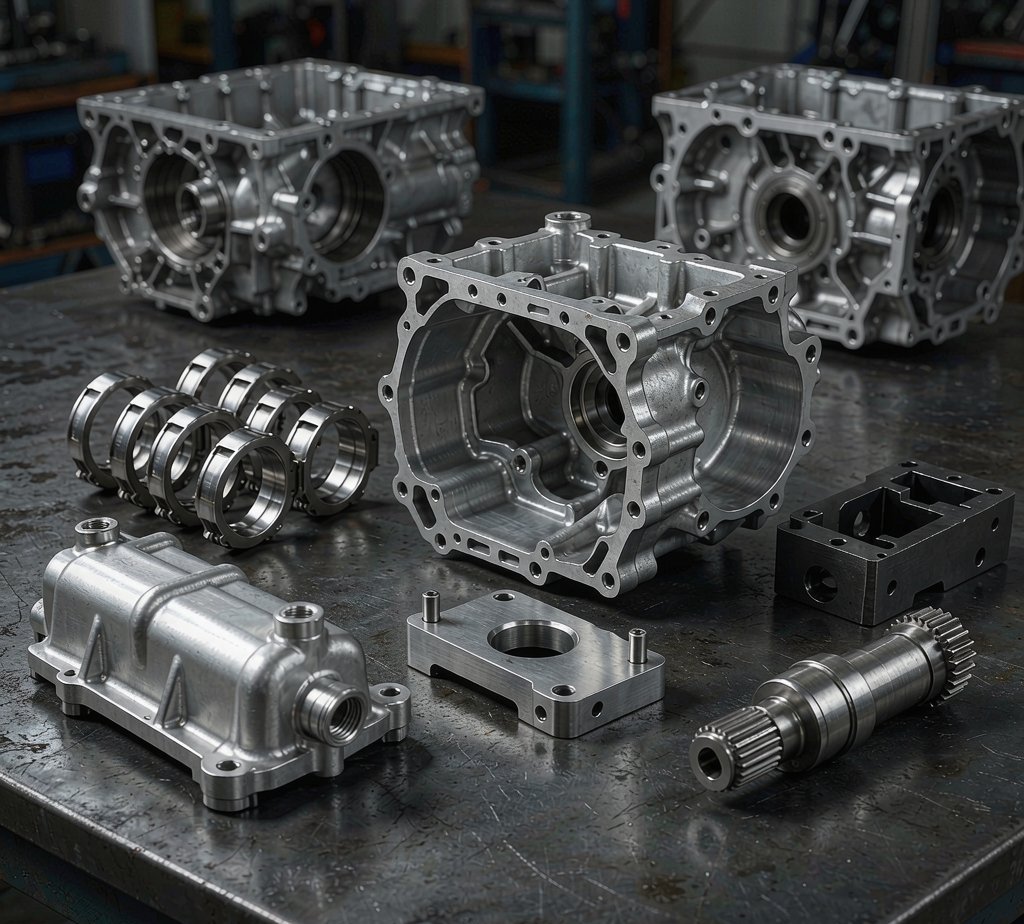
Housings and brackets for EV programmes.
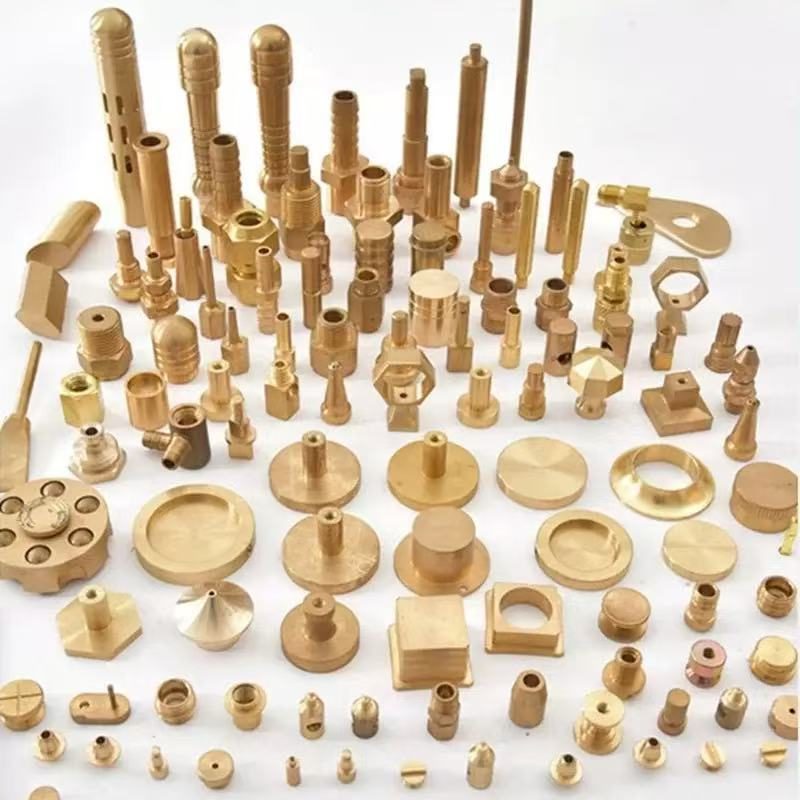
Inverter and controller bodies in 6061.
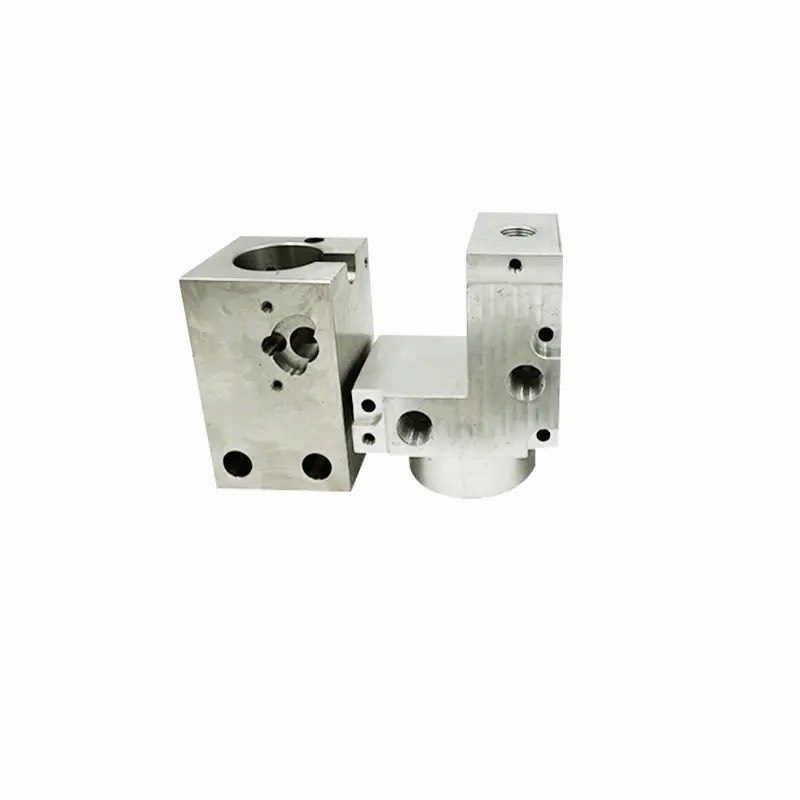
Sealed-channel geometry for cooling.
Five DFM Calls That Keep an EV Part From Failing at the Joint
The failures are predictable: a warped busbar, an air-gapped cold plate, a housing that will not seal.
1. Pick machining for the right volume band
Machining wins for prototypes, validation and low-to-mid volume; casting wins once the design freezes and volume climbs. Brief the part for machining while it is still moving, and we will flag the crossover point honestly rather than machining a part that should be cast. The volume logic is in our low-volume production page.
2. Machine the busbar contact face flat, then break every edge
The weld or bolt joint is the whole point of a busbar, and it only works on a flat, clean, burr-free face. We hold the contact flat to 0.05–0.1 mm and deburr the edges so the part seats and welds the first time instead of being rejected at the cell line. Thin copper work-hardens and springs — so we cut it with sharp tooling and a rigid setup.
3. Keep the cooling-plate bond face in one setup
A cold plate is only as good as its flattest point, because the TIM bridges the gaps. We machine the base and the sealing features in a single clamping so the bond face and the channel stay true to each other, then probe the face so you get a measured flatness, not a hope. The surface-finish rules are in the finish comparison.
4. Choose 5-axis for complex housings
Inverter and motor-controller housings with internal bosses, sealed cavities and awkward datum faces are where 5-axis machining pays for itself — fewer setups means fewer accumulated datums and a tighter result. If a housing needs three fixtures to machine, it will drift; if it needs one, it will not.
5. Send the drawing with the mating spec called out
The weld schedule, the TIM thickness and the cell pitch are the things that get an EV part rejected at assembly. A drawing that calls them out lets us return DFM feedback in 24 hours and run the part against the real mating condition — which is how a first article passes instead of going back for rework. For early-stage work our prototyping page covers the ramp from one part to a batch.
EV Component Machining Questions
Is CNC machining cost-effective for EV components?
What material should a battery busbar be machined from?
How flat must a liquid-cooling plate be?
Do you only machine prototypes, or production EV parts too?
Got an EV part failing at the weld or the thermal joint?
Send the drawing with the weld schedule, TIM thickness and cell pitch called out. We'll return DFM feedback in 24 hours and machine the part against the real mating condition — flat busbar face, sealed cold plate, probed bond face.