Plating for CNC Machined Parts: Electroless Nickel vs Zinc
Zinc plating is the cheapest way to stop carbon-steel CNC parts rusting — a 5–25 μm ASTM B633 coating protects steel even at scratches. Electroless nickel (ASTM B733, 5–50 μm) wins for wear, uniform bore coverage, or tight tolerances. Both add thickness everywhere, so a 25 μm layer shrinks a 10 mm bore by 50 μm — plan the allowance before you machine.
Your Plated Part Came Back Too Tight — Here's the Real Reason
You called out "plate per ASTM B633" and the parts returned a few thousandths too tight. That isn't the plater's mistake — it's a dimension you didn't plan for. Plating is a deposit, not a coating that soaks in, so every surface grows by the full thickness: a bore, a thread, a press fit each loses that much clearance. The fix isn't a bigger ream after plating; it's machining undersize before it. Tell us the finished dimension you need and we'll set the pre-plate size so it lands on target the first time.
Electroless Nickel vs Zinc — Which You Should Ask For
Both stop corrosion, but they protect differently and they treat your tolerances differently. Pick from the function, not the silver color.
| Property | Electroless Nickel (ASTM B733) | Zinc plating (ASTM B633) |
|---|---|---|
| Protection mechanism | Dense barrier coating | Sacrificial (anodic) — protects steel even when scratched |
| Substrates | Steel, stainless, aluminum*, copper, brass (*zincate first) | Carbon & low-alloy steel only |
| Typical thickness | 5–50 μm (5–25 μm common) | 5–25 μm per side (SC1 5 / SC2 8 / SC3 12 / SC4 25 μm) |
| Hardness | 550–650 HV as-plated; 850–1000+ HV heat-treated | Soft coating; low wear resistance |
| Thickness uniformity | Even everywhere, incl. bores & threads (±10%) | Uneven — thick on edges, thin in recesses |
| Corrosion (ASTM B117) | High-P EN 1000+ h at 25 μm | Trivalent clear ~24–72 h; yellow 200–500 h; SC4 500+ h |
| Best for | Wear surfaces, complex geometry, precision fits | Cost-sensitive steel, fasteners, brackets |
| Cost level | Medium–high | Low–medium |
These are the ranges in ASTM B733 and ASTM B633 and the ASTM B117 salt-spray results reported by finishers; the class on your drawing is binding. Electroless nickel is further graded by phosphorus content — Type II/III (low, 1–4%) is hardest as-plated, Type IV (mid, 5–9%) is the general-purpose default, and Type V (high, 10%+) gives the best corrosion and is non-magnetic. See the surface finish comparison chart for how plating sits beside anodizing, passivation and black oxide.
The Dimension Trap: Plan for the Coating Before You Machine
Plating builds outward on every wetted surface, so the coating thickness is a real dimension you machine around — not an afterthought. A 25 μm electroless-nickel layer deposits 25 μm on each wall of a bore, shrinking a 10 mm hole to 9.95 mm (a 50 μm loss) and growing a 20 mm outside diameter to 20.05 mm. Zinc is similar in magnitude, 5–25 μm per side, but it piles up on edges and thins inside recesses, so a 12 μm zinc coat (SC3) on an M6 external thread grows the major diameter about 24 μm — often enough to turn a free fit into a tight one.
| Feature | Before plating (machine to) | After 25 μm EN / 12 μm zinc |
|---|---|---|
| 10 mm bore (finished) | 10.050 mm / 10.024 mm | 10.000 mm / 10.000 mm |
| 20 mm OD (finished) | 19.950 mm / 19.976 mm | 20.000 mm / 20.000 mm |
| M6 external thread | undersize to leave ~50 μm / ~24 μm | full major diameter |
The practical rule: machine critical bores about 2× the coating thickness oversize, or mask the feature so it stays bare; for threads, cut undersize or mask and tell us which. We flag this during quoting so the allowance is built in and the finished part measures where you drew it. The full tolerance chart shows the bands we hold.
Pick the Finish From the Job, Not the Look
The right call comes from the base material, the environment, and how tight the fit has to be.
| Choose this when… | Specify |
|---|---|
| Carbon-steel part, rust is the only enemy, tolerances are open | Zinc plating ASTM B633 SC1–SC2, clear or yellow chromate |
| Steel outdoors / automotive / marine, longer life needed | Zinc ASTM B633 SC3–SC4 yellow chromate, or zinc-nickel for 720 h+ red-rust |
| Wear surface, sliding contact, or hardTooling | Electroless nickel ASTM B733 Type IV, heat-treated for hardness |
| Complex geometry, bores, blind holes, tight precision fit | Electroless nickel ASTM B733 — uniform ±10% everywhere |
| Aluminum part needs corrosion + conductivity or color | Anodizing (MIL-A-8625), not plating |
| Stainless part needs corrosion, no buildup | Passivation (ASTM A967 / AMS 2700) |
Two hard rules we repeat so the drawing is right: zinc plating is for steel only — it does not belong on aluminum or stainless; and high-strength steel (about 31–32 HRC and up) needs a hydrogen-embrittlement relief bake per ASTM B850 after plating. We include that bake automatically when the material calls for it.
How We Handle Plating on Your Parts
We machine your parts in-house and arrange plating through our finishing partner per ASTM B733 or ASTM B633, so the quoted lead time already includes the handoff — the same route as our other surface finishes. On the drawing, call it out explicitly: "Plate per ASTM B733 Type IV SC3" or "ASTM B633 SC3 yellow chromate." Tell us the function — wear, corrosion, electrical — and we'll pick the phosphorus class or chromate and machine the allowance before plating so the finished dimension lands where you need it. For high-strength steel we add the hydrogen-embrittlement relief bake per ASTM B850, and our partner returns plating certs and thickness reports with the shipment. Material choice drives the pre-treatment, so we confirm the substrate before the bath goes in.
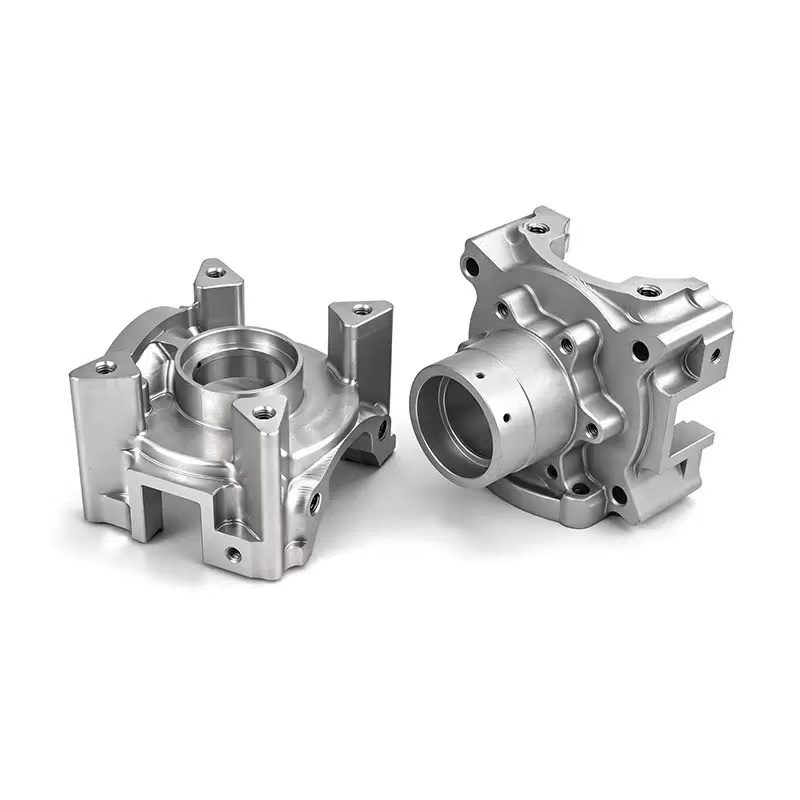
Shafts, fittings, connectors.
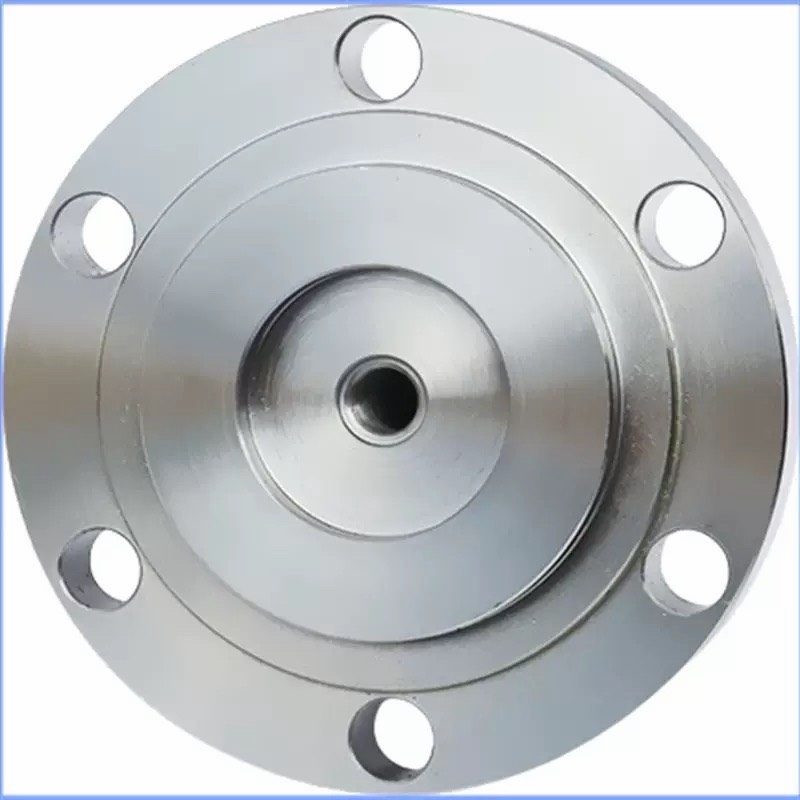
Flanges and housings.
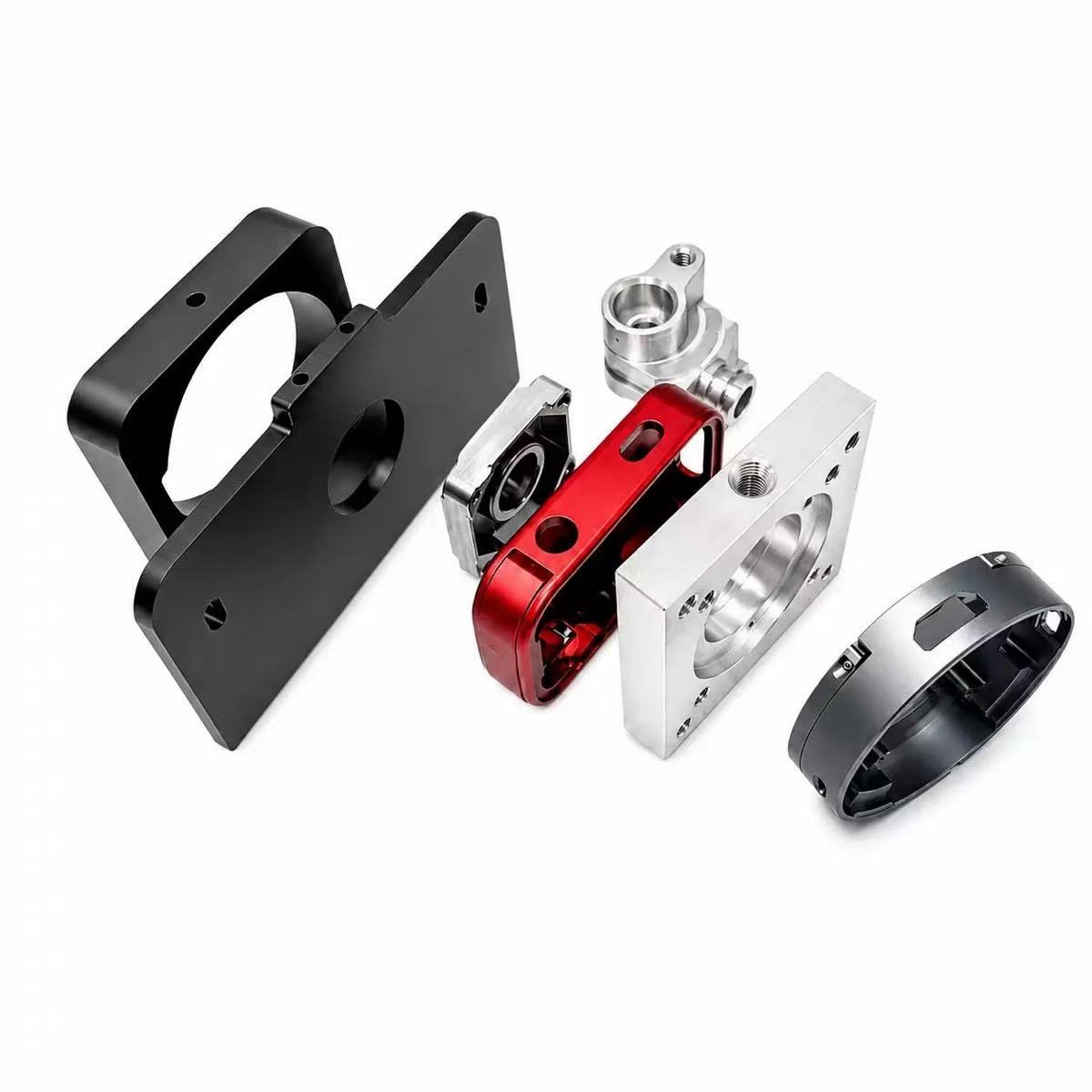
Plated for wear or corrosion.
Plating — Common Questions
Should I specify electroless nickel or zinc plating on my CNC part?
How much does plating change my finished dimensions?
Does plating work on aluminum parts?
Will plating make my threads not fit?
How do you verify plating thickness and quality?
Sources & Further Reading
- ASTM B733 / B733M — autocatalytic (electroless) nickel-phosphorus coatings: types, service conditions (SC0–SC4), heat-treat classes.
- ASTM B633 / B633M — electrodeposited zinc coatings on iron and steel by service condition (SC1–SC4) and chromate type.
- ASTM B117 — operating salt spray (fog) apparatus for corrosion testing of coatings.
- ASTM B850 — post-coating hydrogen embrittlement relief bake for plated high-strength steel.
- ISO 4527 — electro-deposited nickel, autocatalytic nickel, and chromium coatings (international equivalent of B733 class structure).
- AMS 2404 / AMS-C-26074 (formerly MIL-C-26074) — aerospace electroless nickel requirements.
Thickness and hardness figures above are the ranges in the cited ASTM/ISO standards and salt-spray results reported by finishers, not proprietary shop limits. Where this page says "industry-typical," it describes common plating practice rather than a published standard.
Need a part that's plated and still fits?
Send the drawing with the finish and the finished dimension called out. We'll machine it in-house, arrange plating through our partner per ASTM B733 or ASTM B633, build the allowance in up front, and return DFM feedback and a per-drawing quote within 24 hours — so the coating lands where your tolerance needs it.
Cite this page
Engineers and buyers are welcome to link to or cite this reference. It's free to use and we keep the standards current.