Stainless Steel CNC Machining: Grades 304/316/17-4PH, Tolerances & When to Choose It
Stainless steel is the default when a part must resist corrosion and still hold tight tolerance — food lines, marine hardware, medical devices, valves and fixtures. Here is how to pick the grade, what tolerance to expect, and the design rules that keep stainless parts accurate without burning through tooling.
Why Choose Stainless for a CNC Part
Stainless gives you corrosion resistance that aluminum and plain steel cannot match, while still machining to the same ±0.01 mm band we hold on critical features. The trade is that it work-hardens under the cutter, so it needs rigid fixturing, sharp tools and controlled passes — which is why cycle time runs longer than aluminum. For valves, housings, fittings and fixtures that see moisture or chemicals, it is the right call. Our materials overview compares the families, and the three-material comparison lays out the strength, corrosion and cost trade-offs directly.
| Grade | Family | Machinability | Corrosion | Typical use |
|---|---|---|---|---|
| 304 | Austenitic | Fair | Excellent | Food, dairy, general, fittings |
| 316 / 316L | Austenitic | Fair | Best (marine, chemical) | Marine, medical, valves |
| 303 | Austenitic (free-machining) | Good | Excellent | High-volume turned parts |
| 416 | Martensitic (free-machining) | Best of stainless | Moderate | Shafts, fasteners, bushings |
| 17-4PH | Precipitation-hardening | Fair (after H900 harder) | Good | Aerospace, high-strength parts |
| 440C | Martensitic (high carbon) | Poor (hard) | Good | Bearings, wear parts |
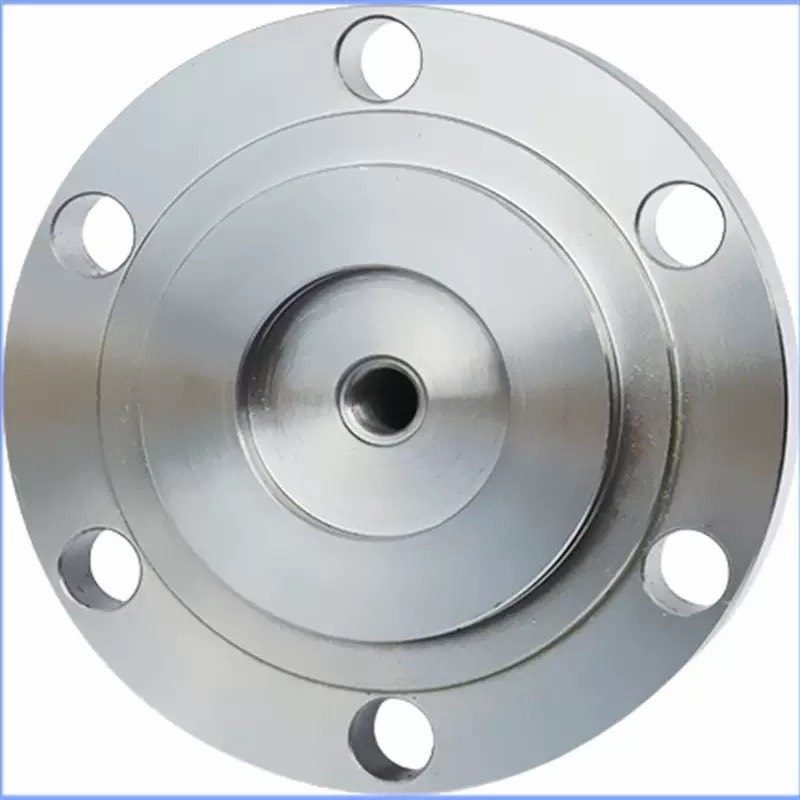
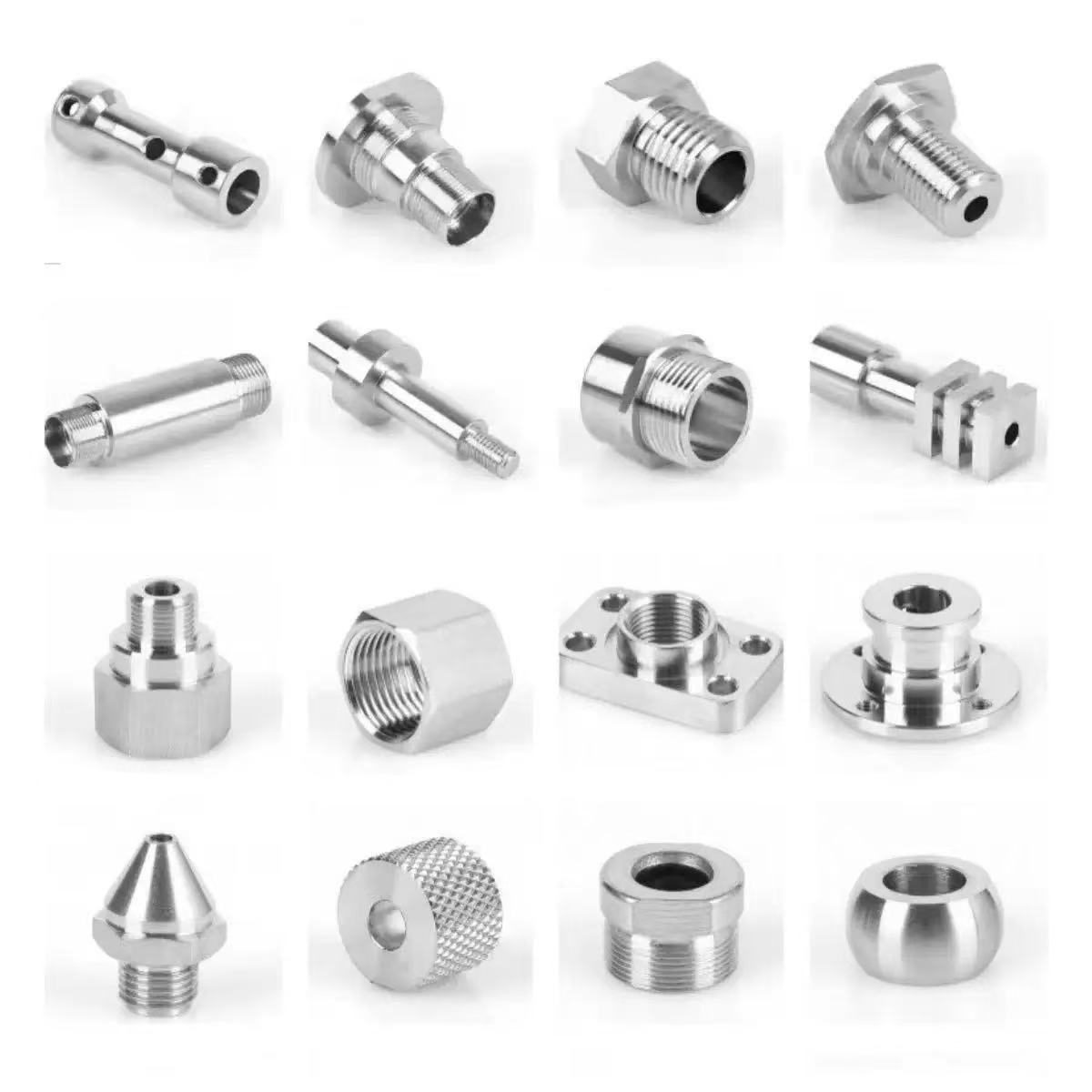
303/416 shafts and standoffs on our lathes. See CNC turning.
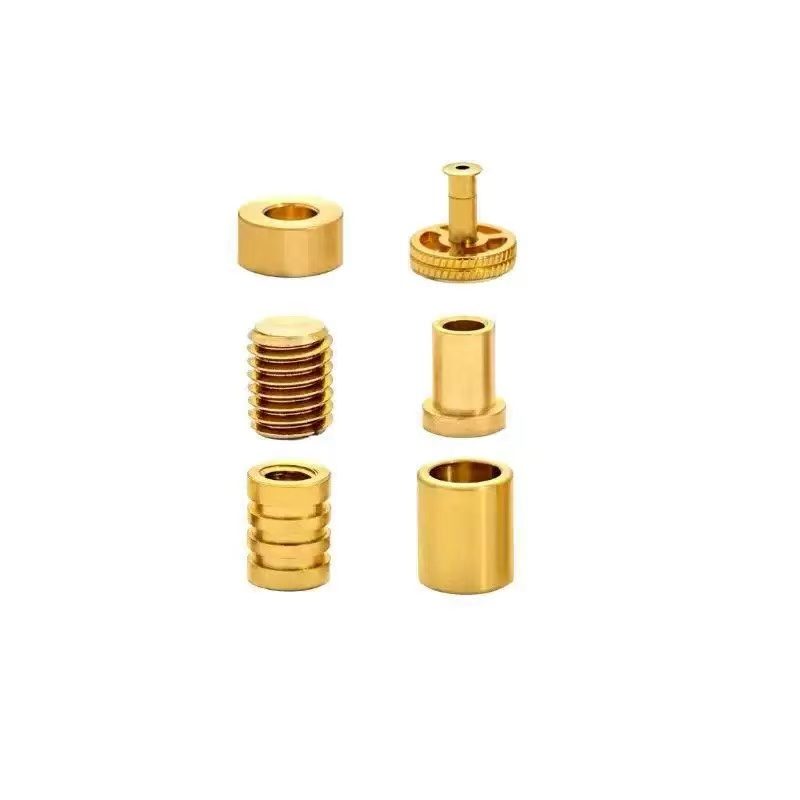
Threaded adapters in 304/316. Thread rules are in our design guide.
Tolerances and Surface Finish on Stainless
Stainless machines to the same tolerance band as aluminum — routinely ±0.025 mm, and ±0.01 mm on critical features with a controlled setup — but it demands sharper tooling and slower passes because it work-hardens. The full table and the cost curve behind it are in our tolerance chart. For corrosion resistance, passivation is the standard post-machining step; electropolishing gives a bright, smooth, easy-to-clean surface for medical or food contact. Heat-treatable grades like 17-4PH are usually rough-machined, hardened, then finish-machined to hold tolerance through the hardness change.
Which Process
Round stainless parts are turned; blocky ones are milled. For parts with angled features or multiple faces, 5-axis machining cuts setups and keeps critical relationships true — we run 5-axis on stainless manifolds where flatness and port alignment matter. Stainless suits both prototypes and low-volume runs. If you are weighing stainless against aluminum or titanium, the three-material comparison is the fastest way to decide.
Design Rules That Keep Stainless Cheap
Stainless rewards a few rules. Pick a free-machining grade (303/416) when corrosion resistance allows it — cycle time drops sharply. Use rigid fixturing and avoid interrupted cuts that let the material work-harden. Standardize thread sizes to off-the-shelf tools, and only call out tight tolerance where the function needs it. The deeper version is in our cost-reduction guide and the GD&T guide for buyers. If you are deciding between machining and printing for a low-volume part, the machining vs 3D printing comparison helps.
Frequently asked
What is the most machinable stainless steel grade?
What tolerance can CNC machining hold on stainless steel?
Does stainless steel need a surface treatment after machining?
Is stainless more expensive to machine than steel or aluminum?
Need a custom stainless part?
Send the drawing and the grade. We'll mill or turn it to tolerance, passivate if you want, and flag any dimension that is tighter than the function needs.
Related: Material Selection Guide · Carbon & Alloy Steel CNC